An All-Day Trip on an E-Bike: The Complete Guide to Gear, Logistics and Technique
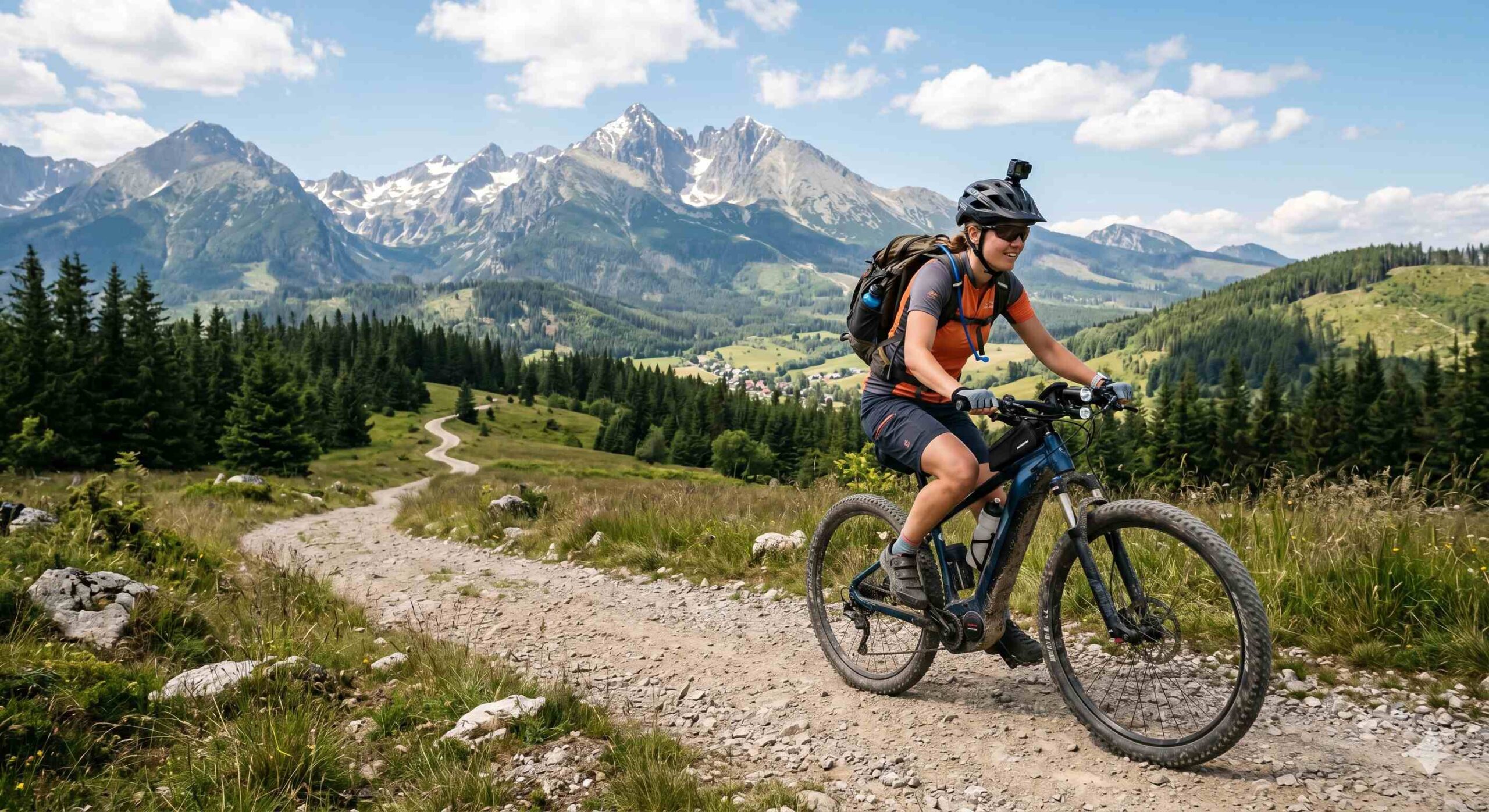
All-day rides on an e-bike let you cover distances that would require extreme fitness on a conventional bike. A larger range and a battery on board, however, mean that the failure of a single component or underestimating the logistics can turn a technically advanced machine into an immobile load weighing over 20 kilograms. The success of a 60–100 kilometre route depends on precise energy management, the right eating routine and a comprehensive repair and first-aid kit.
When planning an all-day trip you need to look at your equipment as a whole. The battery's energy consumption rises linearly with the total weight of the load, while the rider's safety depends on being prepared for both mechanical failures and unexpected health problems. This article gives a detailed overview of how to prepare your bike, optimise the battery's consumption and what to pack in your backpack to cope with emergencies deep in the countryside.
Overview of the key gear and logistics parameters
| Category | Component / item | Recommended value / specification | Why it matters on an all-day ride |
| Drive and battery | Energy reserve | At least 500 Wh to 750 Wh (or a range extender) | Determines the real range in hilly terrain. |
| Hydration | Fluid supply | 0.75 l of water for every 2 hours of riding (at least 2–3 l in total) | Prevents dehydration and muscle cramps under load. |
| Nutrition | Energy intake | 30–60 g of carbohydrates per hour (gels, bars, bananas) | Keeps muscle glycogen levels stable. |
| Electronics | Navigation and lighting | Smartphone at 100% + power bank, LED lights | Safety, orientation and calling for help in an emergency. |
| Repair kit | Puncture and chain repair | 2× spare tubes, plugs, chain tool, Allen keys | The ability to fix the most common mechanical failures on the route. |
| Medical care | Cycling first-aid kit | Emergency foil blanket, sterile dressings, plasters, disinfectant | First aid for falls and abrasions in remote terrain. |
Pros and cons of extended expedition gear
Pros
- Complete self-sufficiency: The ability to fix a puncture, a broken chain or loose components on the spot without needing to be towed.
- Medical preparedness: A first-aid kit allows you to treat wounds immediately and stabilise injuries before the rescue services arrive.
- Stable physical performance: Enough well-spread calories and electrolytes eliminate a sudden drop in energy ("hitting the wall").
- Safety in poor visibility: Your own independent lighting and a charged phone guarantee a safe return even after an unplanned delay.
Cons
- A heavier load: Every kilo in your backpack increases the pressure on your seat and slightly increases the current drawn from the e-bike battery on climbs.
- The need for more luggage space: You need to invest in a good cycling backpack with a ventilated back or frame bags.
- Longer preparation time: Checking, charging and packing all the electronic and mechanical components before departure takes more time.
Comprehensive preparation for an all-day route
Hydration and the body's energy management
Even though the electric motor helps you over the hardest climbs, an all-day ride is still a cardiovascular activity in which the body uses large amounts of water and glycogen. When you're short of fluids your concentration drops, which increases the risk of a fall on technical descents on a heavy e-bike.
The basis is two cycling bottles on the frame, ideally 0.75 l each, or a hydration bladder in your backpack. One bottle should contain plain water and the other an isotonic drink that replaces the sodium, potassium and magnesium lost through sweat.
As far as food goes, an all-day trip is no place for heavy restaurant lunches. Fats and excess protein slow digestion and divert blood from the muscles. The body needs quickly usable carbohydrates. Eat smaller portions every 45 to 60 minutes. Energy bars, flapjacks, bananas and, for emergencies, fast carbohydrate gels are ideal.
Peripheral electronics: navigation, lights and documentation
A smartphone running GPS navigation with the display on can drain in 3–4 hours. An external power bank (at least 10,000 mAh) is therefore essential equipment. Keep your phone in a handlebar case or in the top pocket of your backpack.
Even if you plan to be back in daylight, an all-day ride can stretch into the evening because of a puncture or breakdown. A front LED light with at least 400 lumens and a rear flasher must be fitted to the bike, with their batteries fully charged before the ride. If you use lights powered directly from the e-bike's main battery, check in the control unit settings that the light reserve is activated (the system keeps residual capacity for the lights even after motor assistance switches off).
For enthusiasts who want to document the route, an action camera or compact camera is the ideal solution. Mount the camera on a chest strap or the handlebars, not on your helmet, where it increases leverage in a crash. Keep all spare camera batteries inside your backpack, where they are protected from vibration and cold.
Technical self-sufficiency: tools and spare parts
E-bikes put much more strain on components than conventional bikes. The combination of the rider's strength and the torque of a mid-drive motor (often over 85 Nm) means extreme loads on the chain and cassette.
Your backpack should contain a cycling multi-tool that must include a chain tool and the basic Allen keys (4, 5, 6 mm) along with a Torx T25 (for brake disc bolts). In case the chain breaks, pack a quick link compatible with your number of gears (e.g. 11-speed or 12-speed).
A puncture is the most common failure. If you use a tubeless system, take a repair kit with plugs and an applicator. If you ride with classic inner tubes, pack two spare tubes of the right size (27.5" / 29") and width, plus self-adhesive patches. To remove the tyre you need at least two sturdy plastic tyre levers. Don't forget a high-volume pump that can quickly inflate wide e-bike tyres. If your bike's wheels are secured with nuts (common with rear hub motors), you must carry the appropriate open-ended or ring spanner (usually 15 mm), otherwise you won't be able to remove the wheel on the route.
Medical care and first aid
The greater weight and higher average speed of an e-bike mean that falls tend to be harder than on a conventional bike. In remote forest terrain it can take the rescue services tens of minutes to arrive, so a compact first-aid kit is a critical part of your equipment.
The first-aid kit should be packed in a waterproof bag and contain:
- Sterile dressings and compresses to stop heavier bleeding.
- A set of plasters in various sizes for minor abrasions.
- A non-stinging disinfectant spray (e.g. Betadine) to clean dirt and grit out of a wound.
- An emergency foil blanket that can keep an injured rider warm in case of shock or while waiting for help in cold weather.
- A triangular bandage to immobilise the arm if a broken collarbone – a typical cycling injury – is suspected.
Conclusion with a final checklist
Before you open the door and get on your bike, it is critically important to do a final cross-check of all your equipment. A forgotten battery key, a flat power bank or a missing first-aid kit can end even the best-planned ride early. Go through this list point by point just before you leave to make sure you haven't forgotten anything.
Final checklist:
Hardware and the bike:
- [ ] The e-bike's main battery is fully charged to 100% and securely locked in the frame.
- [ ] Tyre pressure is adjusted to the weight of the load and the type of surface.
- [ ] The brake pads are thick enough and the calipers are centred.
- [ ] The chain is lubricated and the excess oil wiped off with a rag so it doesn't attract dust.
- [ ] All bolts (stem, handlebars, seat post) are tightened to the specified torque.
Repair kit and first aid in your backpack:
- [ ] A compact cycling first-aid kit (dressings, plasters, disinfectant, foil blanket).
- [ ] Two spare tubes of the right size + sturdy tyre levers + a working pump.
- [ ] A multi-tool with an integrated chain tool and the right chain quick link.
- [ ] A spanner for removing the wheel (if the axles don't use a quick-release or integrated Allen fitting).
- [ ] Zip ties and a piece of insulating tape for emergency fixing of components.
Energy, hydration and electronics:
- [ ] At least 2 litres of fluids (plain water + an isotonic drink in the second bottle).
- [ ] Enough food (carbohydrate bars, flapjacks, gels, bananas).
- [ ] A smartphone charged to 100% with offline maps of the area.
- [ ] A power bank (at least 10,000 mAh) together with the right charging cable.
- [ ] The front and rear LED lights are fully charged and working.
- [ ] The action camera or camera has a cleared SD card and charged batteries.