Correct Tyre Pressure: The Most Underrated Secret of Your Electric Scooter
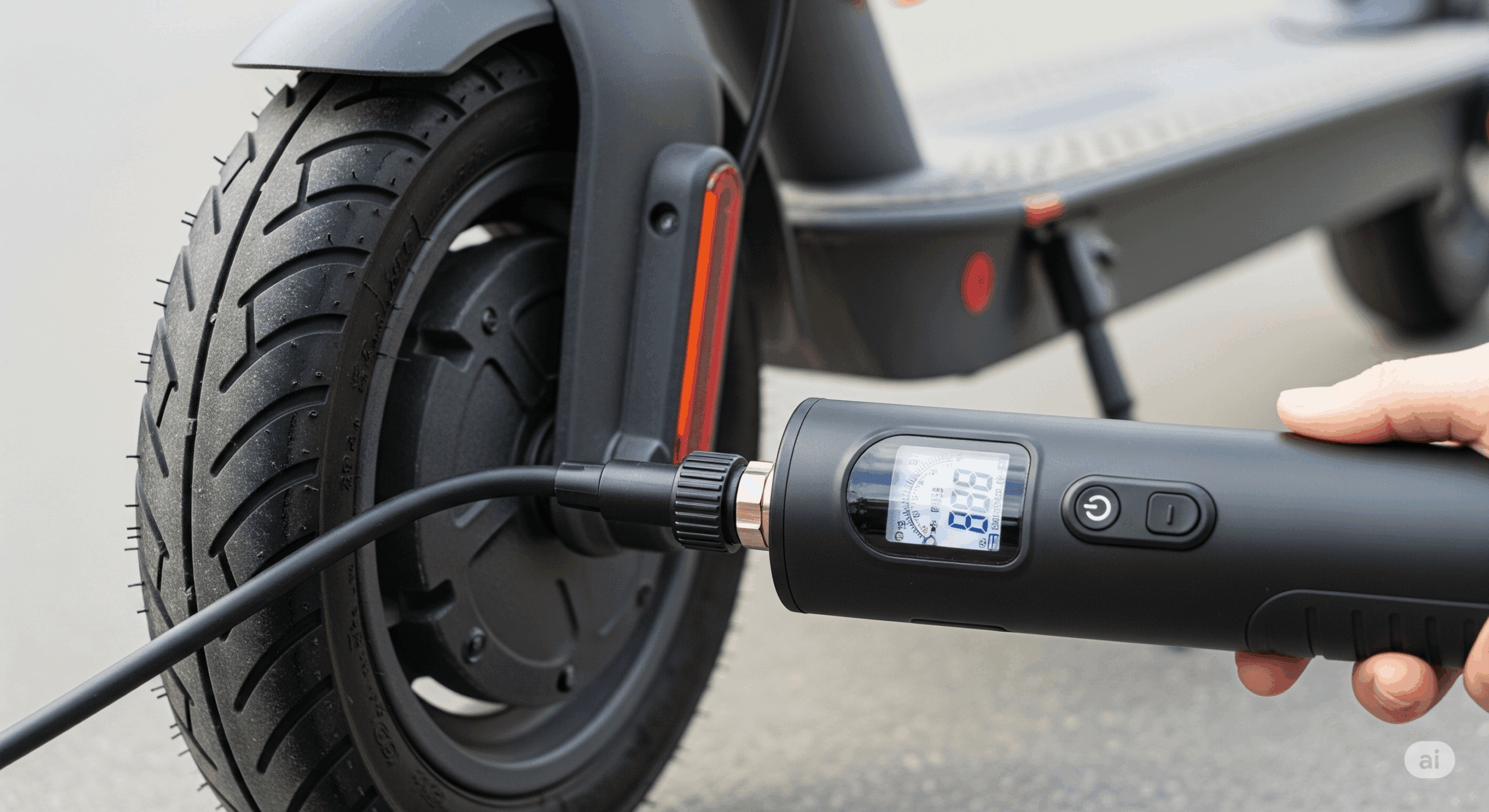
Do you think the most important things about your electric scooter are range, motor power or battery capacity? Wrong. One of the most important, yet most frequently neglected, factors that affects almost every aspect of your ride is the correct tyre pressure.
It's a simple matter that takes a couple of minutes, but it can dramatically improve the safety, comfort and even the range of your scooter. Let's look at why it is so important and how to do it.
Why is the correct pressure so important?
1. Range and performance: This is the main reason for most riders. Under-inflated, soft tyres have much higher rolling resistance. This means the motor has to work much harder to maintain the same speed. The result? The battery drains considerably faster and your maximum range can drop by tens of per cent.
2. Safety and puncture prevention: A correctly inflated tyre is key to your safety.
- Under-inflated tyres: They are extremely prone to punctures – so-called "pinch flats". When you hit a kerb or a pothole, the soft tyre is compressed so hard that the inner tube gets pinched against the rim. Soft tyres also worsen handling and stability in corners.
- Over-inflated tyres: A tyre that is too hard has a smaller contact patch with the road, which reduces grip, especially on wet or uneven surfaces.
3. Riding comfort: The right pressure helps the tyre absorb small bumps. Tyres that are too hard transmit every impact straight into your hands and body, making the ride unpleasant and tiring.
4. Tyre life: The wrong pressure causes uneven and faster tyre wear, leading to premature replacement.
How to find the correct pressure for your scooter?
Forget guessing "by feel". You'll find the right value in two places:
- The tyre sidewall (the most important source): Look carefully at the side of the tyre. You'll find a marking such as "INFLATE TO 50 P.S.I." or "3.5 BAR". This is the maximum recommended pressure and you should stick to it.
- The manufacturer's manual: Sometimes the manufacturer gives a recommended pressure range in the user manual.
What do the units mean?
- PSI (pounds per square inch): The most commonly used unit. For typical scooters (8.5 to 10-inch wheels) the value is in the range of 45–55 PSI.
- BAR: The European unit. The conversion is simple: 1 bar ≈ 14.5 PSI.
Note: Heavier riders should stay closer to the upper limit of the recommended pressure, while lighter riders may prefer a slightly lower pressure (still within the manufacturer's recommendations).
How to check and inflate your tyres correctly?
What you'll need:
- A pump with a pressure gauge: Investing in a good pump with an accurate gauge will pay for itself many times over.
- A valve extension adapter: The valve on scooter wheels is often hard to reach. This small adapter, which screws onto the valve, makes inflating incredibly easier.
Step by step:
- Unscrew the valve cap.
- If necessary, screw on the extension adapter.
- Firmly and quickly attach the pump head to the valve (or adapter).
- Check the current pressure on the gauge.
- Inflate to the required value.
- Quickly detach the pump and screw the cap back on.
How often should you check the pressure?
Scooter tyres are small and lose pressure faster than bicycle or car tyres. Make it a routine and check the pressure at least once every 1–2 weeks and always before a longer planned ride.
Keeping the right pressure is the simplest and cheapest way to ensure a safe, comfortable and efficient ride. Make it a habit and your scooter will thank you.