Cycle Path Rules in Slovakia 2025: Who Has Right of Way and What Are the Fines
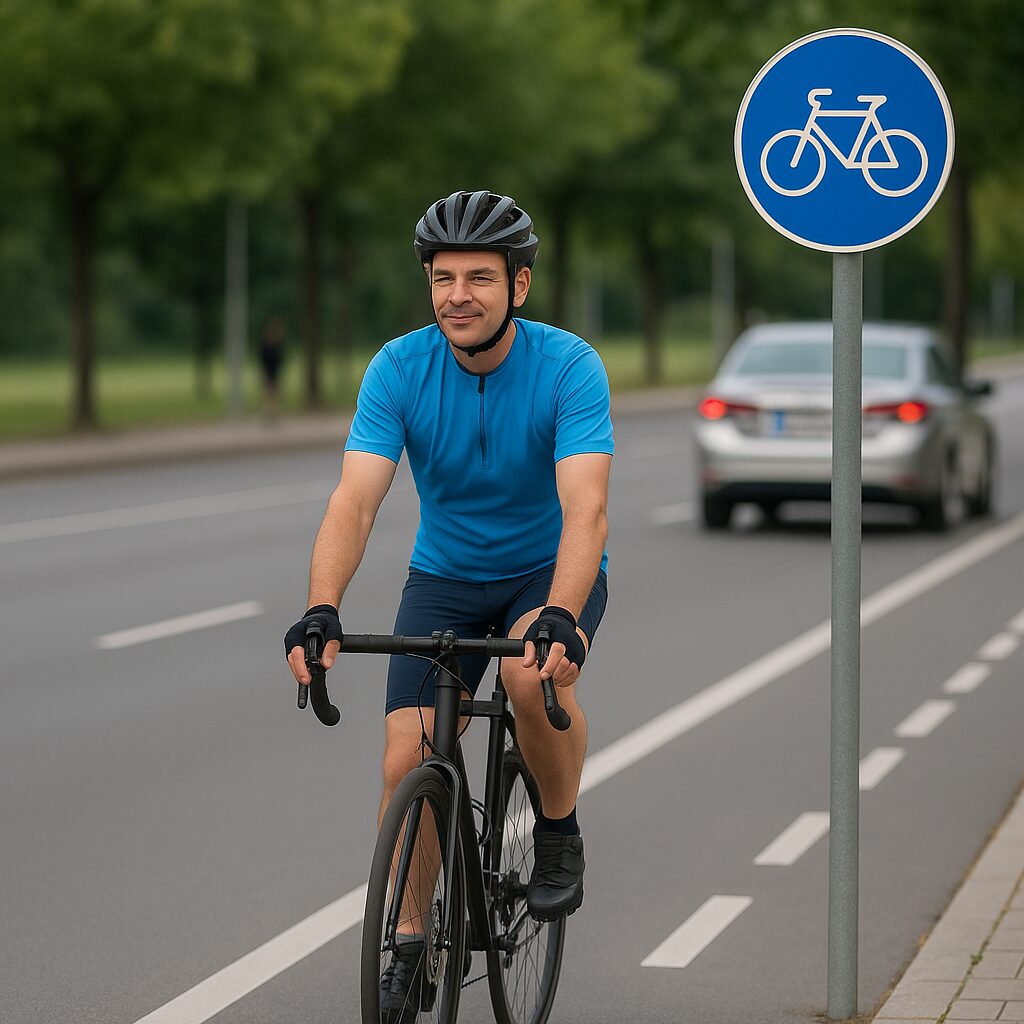
The summer season is in full swing and cycle paths in Slovakia are busy. Traditional cyclists are being joined by riders of modern electric scooters and e-bikes. How do you find your way in this traffic? Who may ride on a cycle path, what are the rules for electric scooters and can you be fined for riding without a helmet? Here is a complete, up-to-date overview of the rules under Slovak law, including a comparison with other countries, so that you feel safe on the road and avoid unnecessary trouble.
Who may and who may not use a cycle path in Slovakia?
All the rules are based on the official document, the Road Traffic Act No. 8/2009 Coll., which is clear on this. A cycle path (officially a "cyclists' path") is not for everyone. Let's sort it out.
YES, these may use a cycle path:
- Cyclists: On a regular bicycle and on an electric bicycle (e-bike), provided it meets the "pedelec" standard. This means the motor power doesn't exceed 250 W and the assistance cuts out at 25 km/h. The law treats these e-bikes as ordinary bicycles.
- Electric scooter riders: For them the cycle path is the primary route. They must, however, ride on the right-hand side.
- Skaters and skateboarders: People on roller skates, roller skis or similar sports equipment (including skateboards) may use the cycle path as long as they don't restrict or endanger cyclists.
NO, these may not use a cycle path (or only with restrictions):
- Pedestrians: A cycle path is not a pavement. Pedestrians may only step onto it when necessary (for example to get around an obstacle) and must not hinder cyclists. The exception is shared paths for pedestrians and cyclists, where everyone must be as considerate as possible.
- Motor vehicles: Mopeds, motor scooters, motorcycles and cars are strictly prohibited from entering cycle paths.
- "Fast" e-bikes and e-scooters: Machines that don't meet the limits above (e.g. S-Pedelecs with assistance up to 45 km/h or scooters capable of more than 25 km/h) are considered motor vehicles by law. They may not use cycle paths and require a driving licence and registration.
What are the fines for using a cycle path without permission?
Ignoring the rules and traffic signs doesn't pay. Anyone who enters a cycle path without being allowed to commits a traffic offence. The exact amounts are set out in the official schedule of fines issued by the Slovak Ministry of the Interior.
- Drivers of motor vehicles (cars, motorcycles, mopeds): A driver who enters a cycle path, or stops or parks on it, breaks several rules at once. They face an on-the-spot fine of €50. In administrative proceedings the authorities may impose a higher penalty. Moreover, if a vehicle parked like this obstructs traffic, the police may have it towed away at the owner's expense.
- Pedestrians: A pedestrian who walks on a cycle path without good reason (unless it is a shared path for pedestrians and cyclists) is also breaking the law. For this less serious offence, a police officer can impose an on-the-spot fine, usually of €20 to €30.
Rules for individual vehicles: what you need to know
Knowing your rights is important, but so are your obligations. Specific rules apply to each group.
1. Bicycles and standard e-bikes
The same rules apply to cyclists and users of standard e-bikes.
- Where to ride: Primarily on the cycle path. If there isn't one, along the right-hand edge of the road.
- Helmet: Children under 15 must wear one. We strongly recommend it for adults.
- Alcohol: In built-up areas and on cycle paths the law tolerates up to 0.5 per mille. Outside built-up areas there is zero tolerance.
- Lighting: In poor visibility you must have a white light at the front, a red light at the rear and reflective elements on yourself.
2. Electric scooters
Under the law, e-scooter riders are drivers of a non-motorised vehicle.
- Age: On the road an e-scooter may only be ridden by someone over 15. On cycle paths, field tracks and in residential zones there is no age limit.
- Riding two up: The law prohibits it. One scooter is for one person only.
- Riding on the pavement: You may ride on the pavement, but only at walking pace and without endangering pedestrians. Always prefer the cycle path or the edge of the road.
- New compulsory insurance (third-party liability): Watch out! Since 1 August 2024 you must have third-party liability insurance for electric scooters with a maximum design speed above 25 km/h, or weighing more than 25 kg with a maximum speed above 14 km/h. Check your machine's specifications!
What about abroad? A brief overview
- Austria: E-scooters and e-bikes (up to 25 km/h) are treated like bicycles. The law strictly prohibits everyone from riding on the pavement. Use cycle paths or the road.
- Czech Republic: Scooters are classified by power. Standard ones (up to 25 km/h and 250 W) are like bicycles; more powerful ones are motor vehicles. Riding on the pavement is prohibited here too.
- Germany: As in Slovakia, standard e-bikes belong on the cycle path. Fast S-Pedelecs, however, are banned from it. E-scooters are also prohibited from riding on the pavement.
Useful sources
- The current wording of the Road Traffic Act (No. 8/2009 Coll.) – the official legal portal where you can read the exact wording of the law.
- The official schedule of road traffic fines – a complete, up-to-date overview of penalties directly from the Slovak Ministry of the Interior.
Conclusion: consideration and knowing the rules are key
Of course, the basic prerequisite for everyone getting along safely isn't just knowing the cycle path rules, but above all mutual respect. Adjust your speed to the conditions, anticipate, look out for the more vulnerable and remember that a smile and a considerate gesture achieve more than any horn. Have a happy and safe journey!