By E-Bike to Vienna: The Rules, Pavements and What's Different from Home
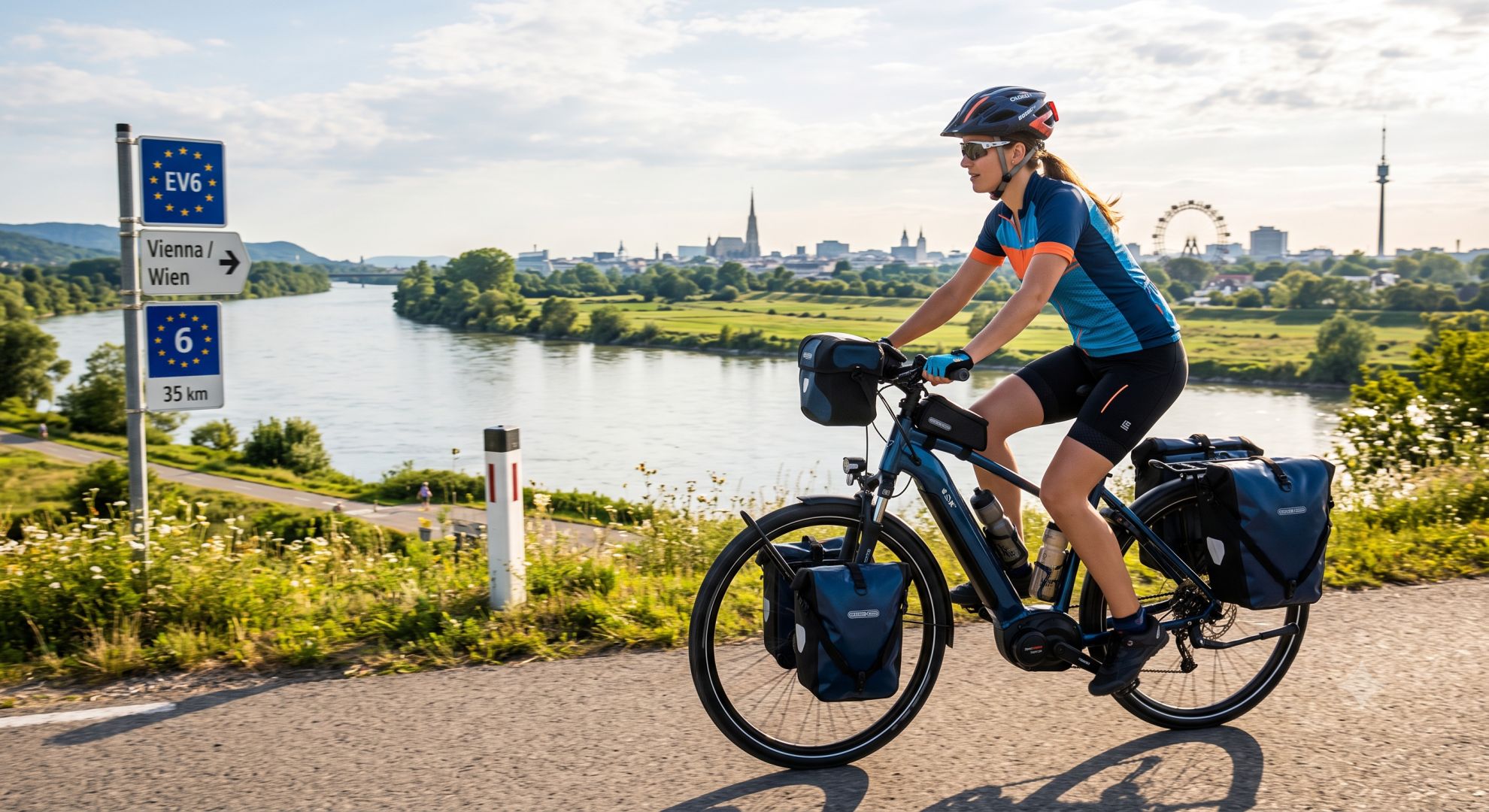
First the basics: when is your e-bike "just a bicycle"
In Austria, just as in Slovakia, the key distinction is this: your e-bike is legally considered a bicycle (in German a Pedelec) only if it meets two conditions – the motor assists only while you pedal (not via a throttle without pedalling) and the assistance cuts out at 25 km/h, with the motor power not exceeding 250 W. Such an e-bike needs no registration, insurance or driving licence – exactly as at home.
If you have an e-bike with a more powerful motor or a higher assisted speed (a so-called S-Pedelec up to 45 km/h), the rules are completely different – you then need a driving licence, insurance and a number plate, and you may not use cycle paths at all, only the road. If you're not sure which category your e-bike falls into, check before you travel – you'll usually find the 25 km/h/250 W limit in the bike's documentation.
Where you may ride
The cycle path (Radweg) is mandatory if there is one. This is an important difference from a free choice – if a marked cycle path runs along your route, you must use it and can't choose the road instead (exceptions apply to wider multi-track bicycles above a certain width or bicycles with a trailer).
Pavements – a clear ban. Riding an e-bike on the pavement is prohibited in Austria just as it is with a regular bicycle. There is no exception for e-assist.
Pedestrian zones – you may only ride there where a traffic sign explicitly allows it.
Where you may only push, not ride
This is the question asked most often – and the answer is simple: anywhere riding is prohibited but pedestrian movement is not. In practice this means pavements and pedestrian zones without a permit for bicycles. When you push your e-bike (walking alongside it, not sitting on it), you are legally a pedestrian – so you may go where you couldn't go in the saddle.
What's changing right now – watch out for e-mopeds
This is currently the most important change for Vienna and mainly concerns more powerful electric two-wheelers without pedals (so-called e-mopeds, common for example among delivery couriers). The amendment to the road traffic act (StVO) changes the rules as follows:
From 1 October 2026 single-track electric vehicles without pedals will no longer count as bicycles. They must be registered, have a number plate and compulsory insurance, the rider needs a driving licence and a helmet – and they may no longer use cycle paths at all, riding only on the road.
For you as a regular cyclist on a classic pedal e-bike (Pedelec up to 25 km/h) nothing changes – you still belong on the cycle path. But if you rent or borrow an electric vehicle without pedals, check which category it falls into, because the rules for it are being tightened right now.
Helmet
In Vienna (as in the whole of Austria) there is currently no general helmet requirement for adult cyclists on a classic e-bike. For children there is an age limit for mandatory helmet use – if you're travelling with a child, check the current age limit before your trip, as it is being tightened in 2026.
Riding side by side
On cycle paths, cycle streets, residential streets (Wohnstraße) and shared zones (Begegnungszone), two cyclists may ride side by side – a pleasant difference from stricter rules elsewhere.
A practical summary before you go
- Check your e-bike's category – a Pedelec up to 25 km/h/250 W is a bicycle and there's nothing more to sort out.
- Use the cycle path if there is one – it's not a choice, it's an obligation.
- Never ride on the pavement – just push if you need to get through.
- If you rent an electric vehicle without pedals, check the current rules – after 1 October 2026 it belongs on the road, not the cycle path.
- When riding with children, check the current age limit for helmets – it is changing right now.
Summary: a classic e-bike up to 25 km/h is a bicycle in Vienna just like at home – it belongs on the cycle path, not the pavement, and you can push it anywhere pedestrians walk. The biggest change in 2026 concerns more powerful electric vehicles without pedals, which lose access to cycle paths from October and must be registered, insured and ridden with a driving licence – this doesn't affect you on a regular e-bike.
This overview is for information only. Austrian legislation is changing in 2026, so check the current situation on official Austrian sources (e.g. ÖAMTC or Stadt Wien) before you travel.