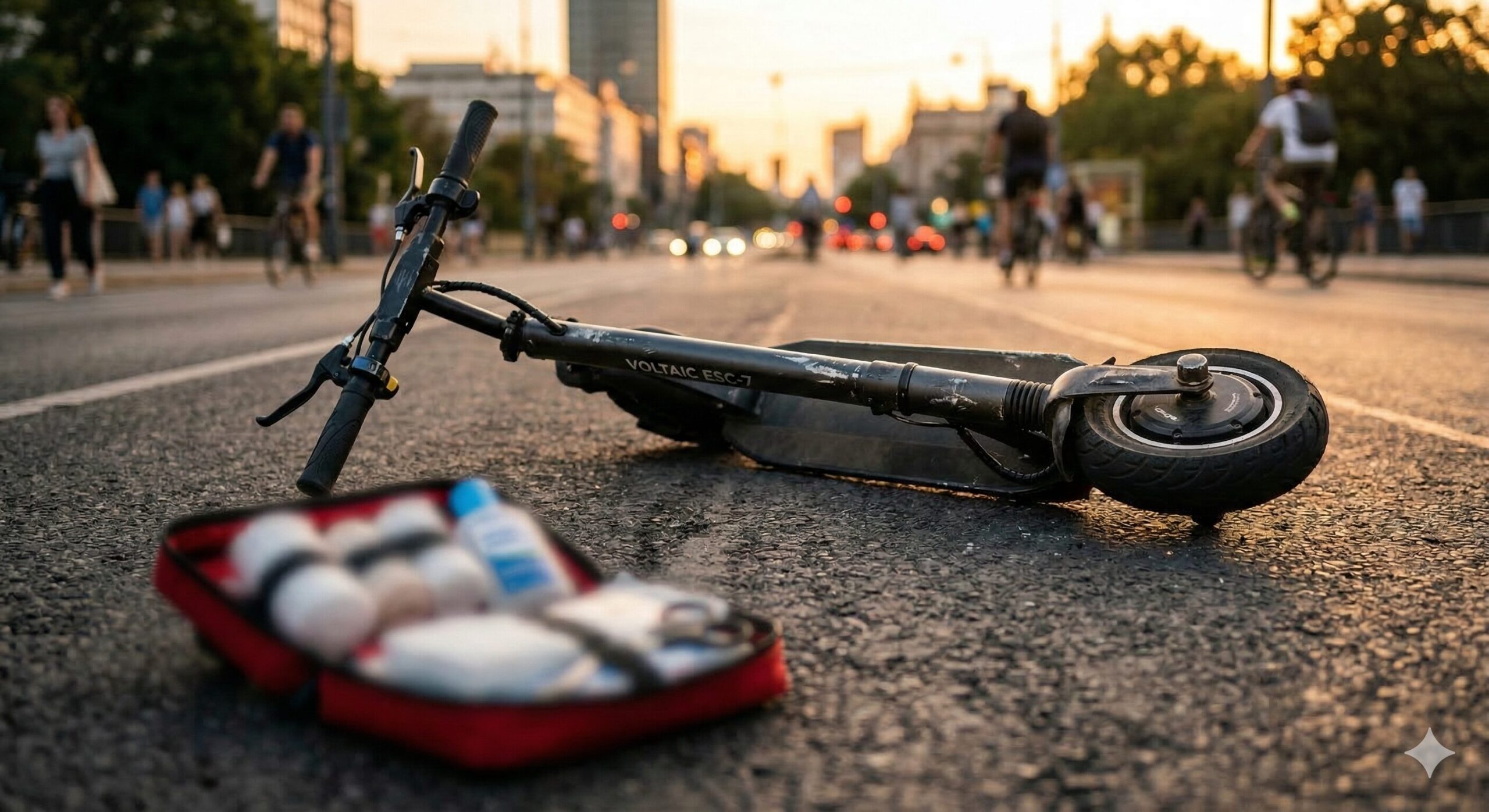
Riding an electric scooter is fast and efficient, but even the most careful rider can have an unexpected fall. At that moment it is crucial to keep a cool head and know how to react correctly. Knowing basic first aid can make a big difference to how an injury heals and prevent it from getting worse.
This guide takes you through the basic first-aid steps for the most common injuries you may encounter on a scooter.
Phase 1: immediate reaction after a fall
Before you start treating any injury, follow these three steps:
- Assess: Evaluate the situation. Are you safe? Are you out of traffic? If not, move to a safe place (if your injury allows it).
- Check for injuries: Quickly check yourself or the injured person. Are you bleeding? Can you move all your limbs? Does your head hurt?
- Secure: Switch off the scooter so it can't move by accident. Call for help if necessary.
Phase 2: treating the most common injuries
1. Abrasions and scrapes ("road rash")
This is the most common type of injury. Although it looks painful, it is usually not serious, but it needs thorough cleaning to prevent infection.
- Clean the wound: The most important step. Wash the wound with clean water. If you have disinfectant wipes to hand, use them to remove dirt (grit, sand).
- Disinfect: Apply a disinfectant spray or solution to the wound.
- Cover: You can leave smaller scratches uncovered; cover larger abrasions with a sterile dressing or a large plaster to protect them from further dirt.
2. Cuts
If the wound is deeper and bleeding, the priority is to stop the bleeding.
- Stop the bleeding: Press a clean cloth, handkerchief or, ideally, a sterile gauze pad from your first-aid kit firmly onto the wound. Keep up constant pressure for at least 5–10 minutes.
- Clean the area: Once the bleeding has stopped, carefully clean around the wound.
- Cover and seek help: Cover the wound with a pressure bandage. If the wound is deep, the bleeding won't stop, or there is a foreign object in it (glass, metal), seek medical help immediately.
3. Sprains and bruises (twisted ankle, bruised wrist)
Falls often result in sprained joints. Symptoms include pain, swelling and limited mobility.
- Use the RICE method:
- R (Rest): Don't put weight on the injured limb.
- I (Ice): Apply a cold compress (ice in a towel, a cold pack) for 15–20 minutes every 2–3 hours. This reduces swelling and pain.
- C (Compression): Carefully wrap the injured area with an elastic bandage. It must not be too tight.
- E (Elevation): Keep the limb raised (e.g. propped up on a pillow).
- If the pain is very severe, you can't put weight on your leg or you suspect a fracture, see a doctor.
4. Suspected fracture or head injury
These situations are serious and require immediate professional help.
- Fracture: Signs include extreme pain, massive swelling, a deformed limb or being unable to move it. Don't move the limb! Try to immobilise it in the position it is in and call the emergency services immediately on 155 or 112.
- Head injury: Even if you were wearing a helmet, never underestimate a blow to the head. If you feel dizzy, confused, nauseous, have vision problems or can't remember what happened, seek medical help immediately. In the event of loss of consciousness (even for a few seconds), vomiting or seizures, you must call 155 immediately.
Your portable scooter first-aid kit
A small pouch that fits in a backpack or handlebar bag can be priceless. It should contain:
- Disinfectant wipes or a small disinfectant spray.
- Plasters in various sizes.
- Sterile gauze pads and a small bandage.
- An elastic bandage.
- Disposable gloves.
Riding a scooter is fun, but being prepared for the unexpected shows responsibility. Knowing what to do gives you confidence and can make a huge difference in an accident. Ride safely!