Don't Ride into Austria on an E-Scooter Without Handlebar Indicators! (New Rules from 1 May 2026)
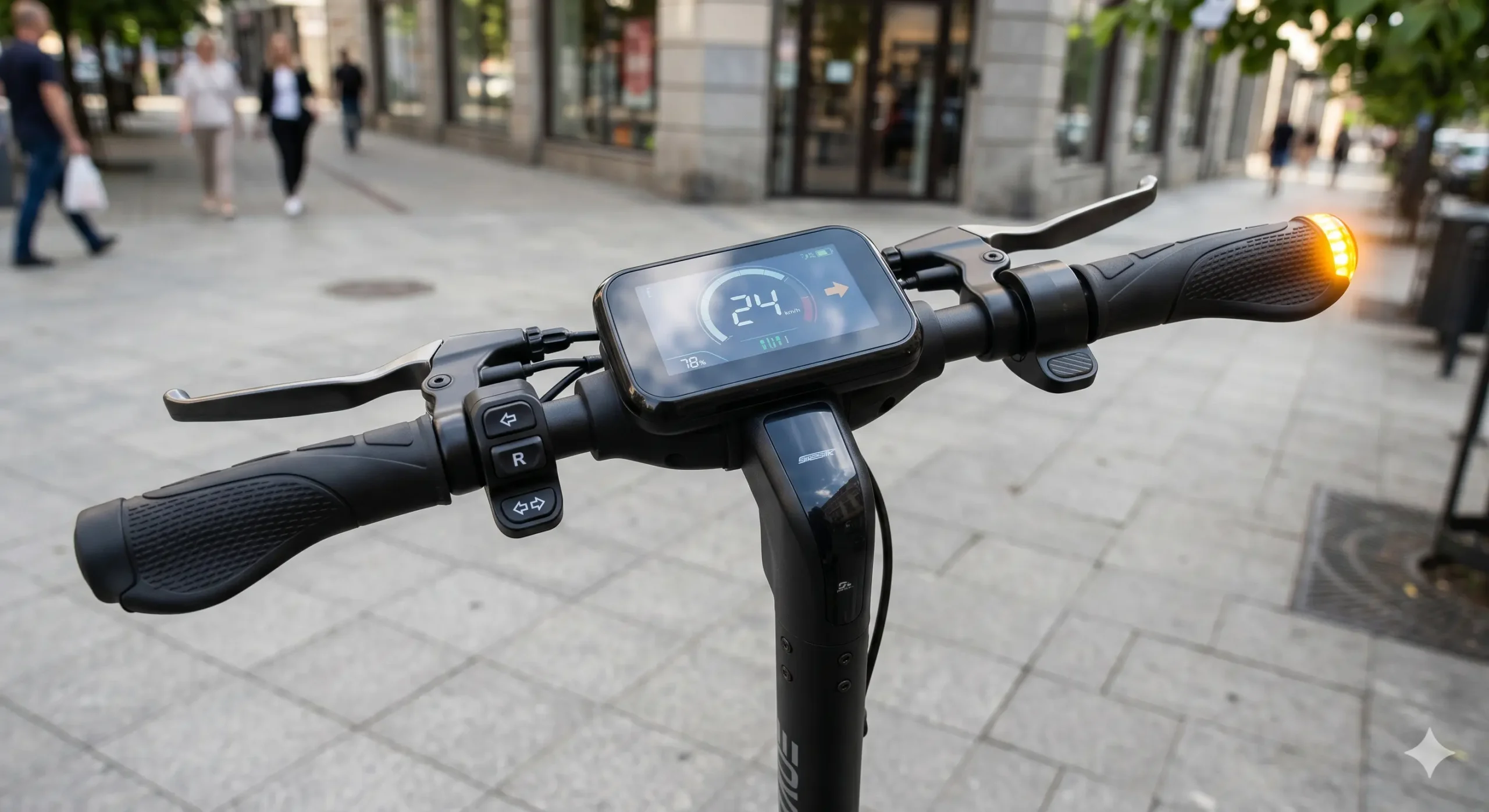
Planning to take your e-scooter on a trip to Austria? Hold on! From 1 May 2026 new rules come into force in Austria, and the most important change – the one they'll turn you back or fine you for – is mandatory indicators.
🚨 What exactly applies from 1 May? Every single e-scooter on Austrian roads must have indicators at the ends of the handlebars. They must flash amber to the front and rear (at a frequency of 90 ± 30 flashes per minute). This rule applies strictly to everyone, regardless of when your scooter was made or bought.
What if there are no indicators for my model? Under Austrian law, indicators on your helmet or mudguard won't help. They must be specifically at the ends of the handlebars. The Austrian automobile club (ÖAMTC) is currently campaigning for a transition period for models on which indicators can't be fitted (e.g. for unusual handlebar profiles), but until that's resolved the equation is simple – without them, better stay off Austrian roads.
Once you've sorted out this essential technical point, run through the other rules too. We've summarised the most common questions about where you may ride and what you can (and can't) do:
What actually counts as an e-scooter in Austria?
It is an electric single-track vehicle with a maximum output of 600 W and a design speed of up to 25 km/h. It must have handlebars, a deck, wheels with an outer diameter of no more than 300 mm and no seat.
Where can you ride it?
Essentially the same rules apply to e-scooter riders as to cyclists.
- Cycle paths and cycle lanes: If they are available, you must use them.
- The road: If there is no cycling infrastructure anywhere nearby, you may ride on the normal road.
- Multi-purpose lanes (Mehrzweckstreifen): You can use them just like cyclists.
- Cycle streets (Fahrradstraße): Entry is permitted.
- Shared zones and residential zones: You may ride here, but you must adapt your speed to pedestrians.
Where is entry strictly prohibited?
- Pavements: Prohibited. The only exception is where the authorities explicitly allow it with an additional sign. Even then you may only go at walking pace.
- Pedestrian crossings (zebra crossings): Riding across them on a scooter is prohibited – you must push it.
- Pedestrian zones: A fundamental ban. However, if bicycles are allowed in, you may ride a scooter there too, but only at walking pace.
Speed, alcohol and phones
- Top speed: You may ride an e-scooter at a maximum of 25 km/h.
- Alcohol: The limit is below 0.5 per mille.
- Phone: Making calls without a hands-free kit while riding is strictly prohibited.
Children and passengers on one scooter
Can two of us ride one scooter? No. An e-scooter is strictly for one person. The ban also applies to carrying children. If you're looking for an alternative, an e-bike or a cargo bike is ideal.
From what age can you ride?
- From 12 (or from 9/10 if the child has a cycling licence).
- Children under 12 may not ride in traffic alone and must be supervised by someone over 16 (this doesn't apply in residential zones).
- Important: All riders under 16 must wear a helmet.
Other mandatory equipment
Besides the indicators mentioned above, every e-scooter on an Austrian road must also have:
- Working brakes.
- A bell or other audible signal.
- Reflectors: white at the front, red at the rear, yellow on the sides.
- Lights in the dark or in poor visibility (white at the front, red at the rear).
Do I need insurance?
In Austria you don't currently need statutory third-party insurance for e-scooters. It is, however, a very good idea to check whether your private insurance (for example home contents insurance) covers damage you might cause to other people or property on your scooter.
What to do in an accident?
- If someone is injured: Secure the scene, call the police and ambulance, provide first aid and ask witnesses for their contact details.
- If there is only damage to property: Secure the scene and find witnesses. Only call the police if you can't agree with the other party or exchange details (for example if an ID card is missing). Take detailed photos of the accident scene (including the surroundings and signs) and report it to your insurer.
Travelling: public transport and a trip to Germany
- Public transport in Austria: Each operator has its own rules, so check them in advance. It always applies that your scooter must not endanger other passengers.
- Germany: Here the advice is radical – don't take your own e-scooter there! In Germany you need special compulsory liability insurance, which as a foreigner without permanent German residence you simply can't take out. Better to rent a scooter there.
And what about e-scooters with a seat or mobility scooters?
- Scooters with a seat: The new May rules on indicators don't apply to them, as they are classified as small motorcycles (category L1e-B). Watch out, though: from 1 October 2026 they will require registration, a helmet, a driving licence and a number plate.
- Three- or four-wheeled mobility scooters: Nothing changes for these models; the new regulations don't affect them at all.