Mastering Battery Management: How to Ride 100+ km on a Single E-Bike Charge
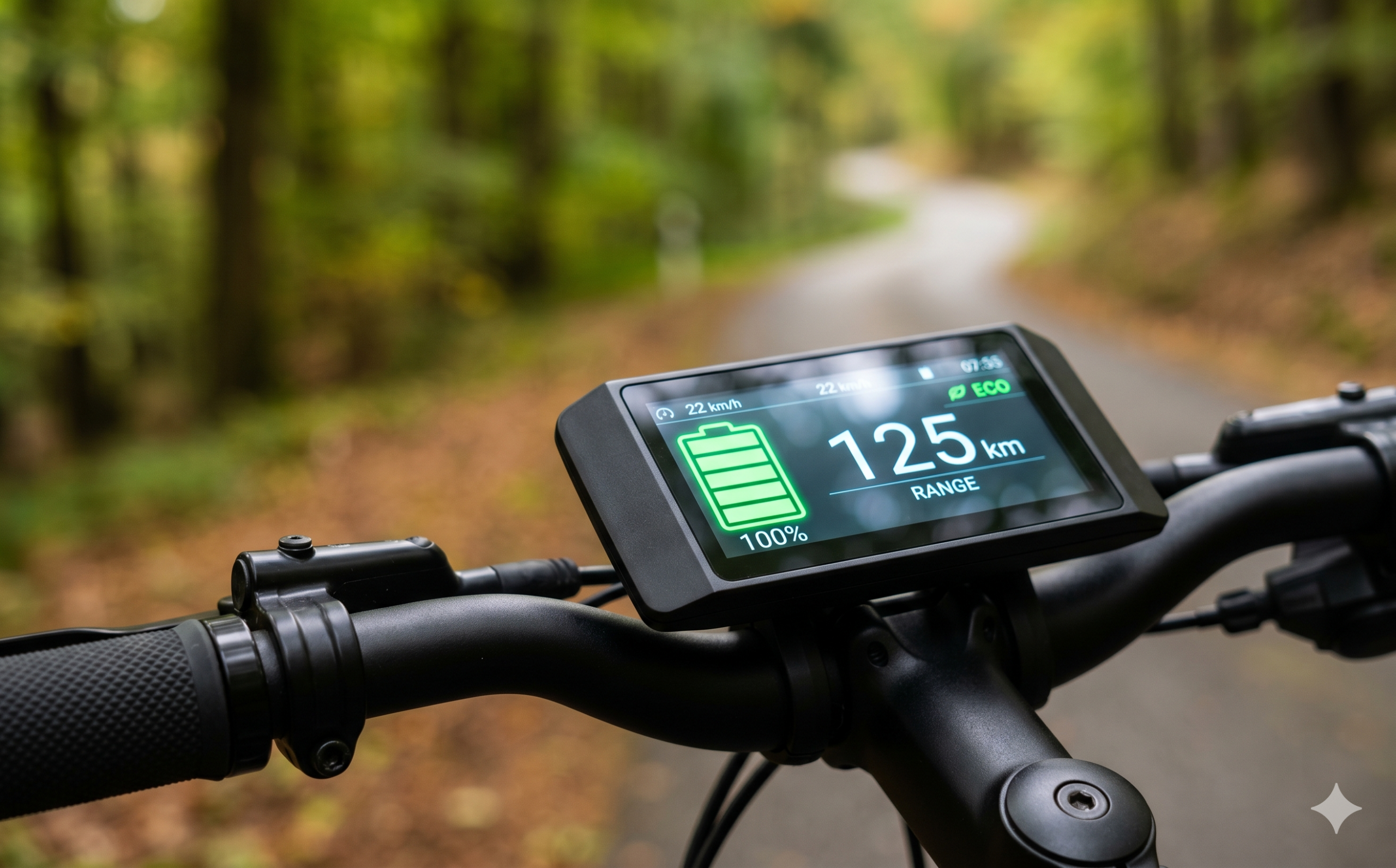
A familiar scenario: you're two-thirds of the way through your dream route, ahead of you is the most beautiful (and steepest) climb of the day, and suddenly the last bar of the battery blinks ominously on the display. Range anxiety can ruin even the best trip.
The good news is that battery capacity is only one factor. How far you actually get is largely down to your legs and your head. This guide is the bible for anyone who wants to get the most out of their e-bike without having to push a 25-kilogram bike for the last 10 kilometres.
The difference between assist modes in real terrain
Every beginner e-biker loves Turbo (or Boost) mode. The feeling of the bike literally launching you up a hill is addictive. But the price of this euphoria is a battery that disappears before your eyes.
- Eco mode (the basis for long distances): It provides only gentle assistance that essentially cancels out the weight of the e-bike itself. It's ideal for flats, gently rolling terrain and transfers on asphalt. If you're aiming for the 100 km mark, this will be your best friend.
- Trail/Tour mode (the golden mean): It responds dynamically to the pressure on the pedals. In technical sections and moderate climbs it gives you exactly as much power as you need while keeping consumption reasonable.
- Turbo mode (emergency rescue): Use it like seasoning – very sparingly. It's intended for the steepest pitches where you would otherwise have to get off, or for getting over extremely technical obstacles. On long drawn-out climbs, Turbo literally devours capacity.
Cadence is king: why low revs kill your range
This is the most common mistake made by cyclists switching from conventional bikes to e-bikes. Thanks to the powerful motor, you feel you can climb a hill in a hard gear with a slow pedalling rate (for example 40 revolutions per minute).
Why is that a problem? Electric motors are designed to work most efficiently at higher revs. If you pedal slowly and forcefully, the motor struggles. It heats up considerably, draws a huge amount of current (amps) and battery efficiency drops sharply.
- Ideal cadence: Keep a pace of between 75 and 90 revolutions per minute. Not only does this save the battery and extend your range by as much as 20–30%, it also spares your knees and the motor itself.
The art of shifting: the derailleur isn't just for decoration
It's easy to get lazy on an e-bike. The motor will pull even the wrong gear, but the price is again lost range and enormous wear on the chain and cassette.
- Shift down before stopping: Before a junction or obstacle, drop to a larger rear sprocket (an easier gear). Starting off in a hard gear demands a huge amount of starting power from the motor.
- Read the terrain: Shift down before you enter a steep climb, not when you're already on it and barely turning the pedals. That way you keep the ideal cadence and the battery will thank you.
When to pack a spare battery or a fast charger?
Planning an epic all-day crossing of the mountains? You have two options to make sure you get back:
- A spare battery (range extender): Smaller add-on batteries (around 160–250 Wh), usually mounted in a bottle cage, are ideal for long rides far from civilisation, where you know you won't stop for lunch or there are no mountain huts. The downside is the extra weight (approx. 1.5 kg).
- A fast charger in your backpack: If you're planning a 100+ km route that includes an hour's lunch break at a mountain hut or inn, a fast charger (e.g. 4 A or 6 A) is the better and lighter choice. In an hour of charging while you eat, you can "squeeze" 30–40% of capacity into the battery, which is easily enough for the way back.
Added value: charging in Slovakia and mountain hut etiquette
In Slovakia the network of charging points becomes significantly denser every year. Where to find energy and how to behave?
Where to find charging points:
- The ebajk connect network: In Slovakia there are many free charging points located right next to popular cycle routes, restaurants and snack bars. These stations often include cable sets for the most common motors (Bosch, Shimano, Yamaha, Bafang).
- Apps: Mapy.com has excellent points-of-interest search – just search for "e-bike charging station". You'll also find charging points on the BikeHub map.
How to ask for a charge at a mountain hut (survival rules):
A socket at a mountain hut – especially one powered by a generator or solar panels – is not a given.
- Politeness first: Always ask the staff first. Never pull the hut's cables out of the wall to plug in your adapter.
- No purchase, no charge: It's an unwritten rule that charging is a service for paying guests. Order a soup, a soft drink or a beer and, while you eat, ask whether you can plug in.
- Your own cable is a safe bet: Don't rely on the hut having your specific connector. If you plan to charge, always carry your charger in a waterproof bag.
- High-mountain specifics: Huts at high altitudes (e.g. in the Tatras or on the ridges of the Fatra mountains) can easily run short of electricity. If the hut runs on a diesel generator, charging an e-bike may trip their fuses. So respect it if the staff refuse.