Helmets in 2026: Why MIPS Technology Makes Sense Even When the Law Doesn't Require Adults to Wear One
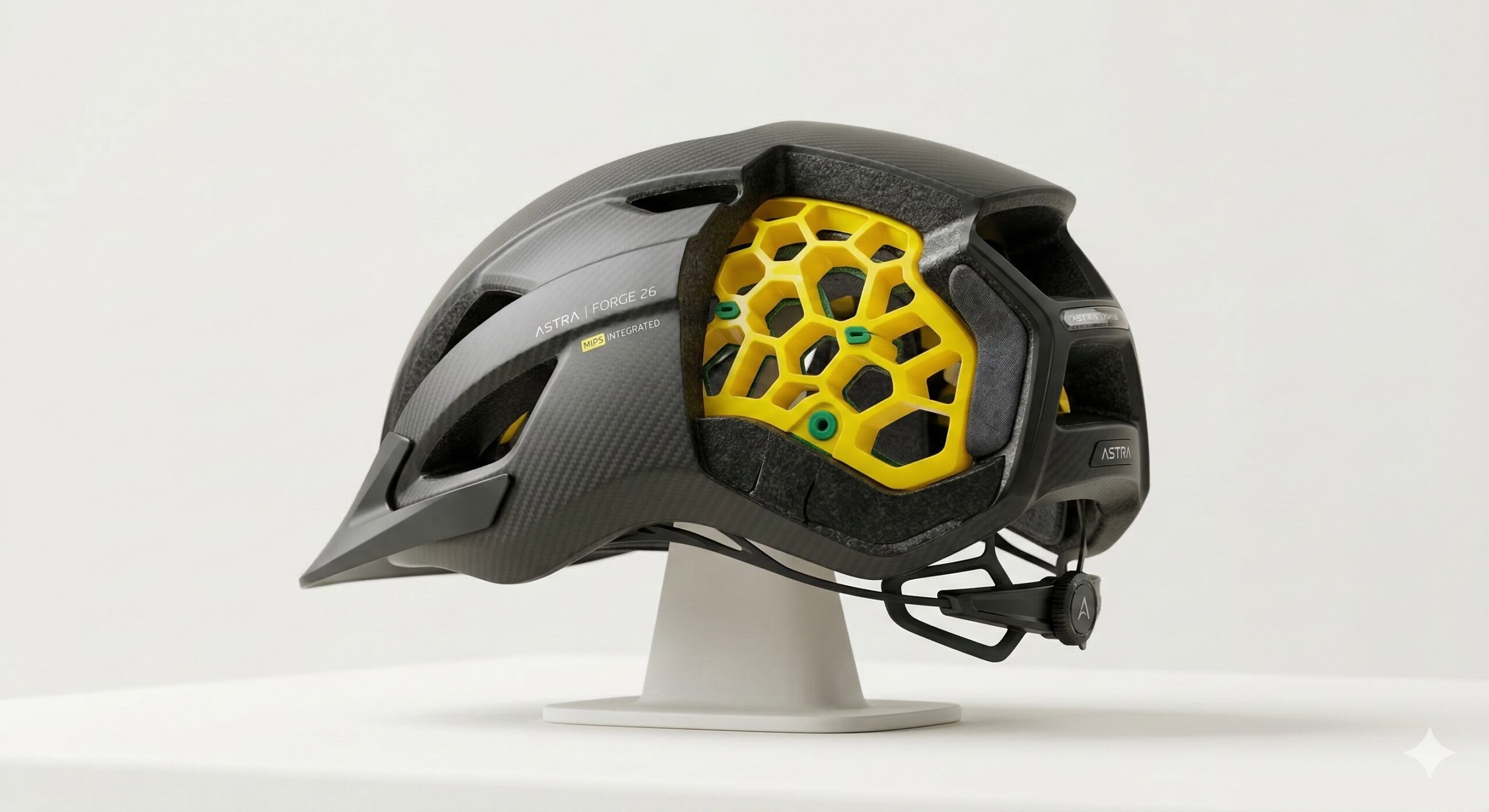
It was 2025 and mobility in our cities had gone through a radical transformation. E-scooters are faster, shared bikes are on every corner and cycle paths are bursting at the seams. Although legislation in many countries still leaves helmet use voluntary for adults, the safety debate has moved on. We no longer ask "whether to wear one" – we want to know how it is made and what it can handle at the critical moment of impact.
The spotlight is on the combination of MIPS and in-mould technologies. If you thought these were just marketing tricks, the reality of 2026 will prove you wrong. Physics doesn't care about statute books.
1. MIPS: when the head moves differently from the helmet
For decades, traditional helmets were designed to protect you from direct impacts. But real-life falls are rarely that "clean". Most collisions happen while moving and at an angle.
MIPS (Multi-directional Impact Protection System) is a thin layer inside the helmet that allows the shell to move slightly (10 to 15 mm) independently of the head on impact.
- Rotational forces: These are the most dangerous for the brain. MIPS redirects and absorbs them, dramatically reducing the risk of a severe concussion.
- An investment in your health: In 2026 we know that even a low-speed fall without visible damage to the skull can have long-term neurological consequences if the rotational energy isn't absorbed.
2. Construction: the chassis that determines comfort and durability
While MIPS deals with "internal" safety, the way the outer shell is made determines how the helmet feels and how much it can take.
- In-mould (the modern standard): The outer shell is fused directly to the energy-absorbing foam. The result is an extremely light and strong helmet with large vents. If you ride every day, this is your first choice.
- Double in-mould (the premium upgrade): An improved process in which the helmet is protected by the shell on the underside and at the back as well. This eliminates exposed polystyrene, which is easily damaged in everyday handling (e.g. putting it down on concrete).
- Out-mould (hardshell): An older technology where the hard shell is simply glued onto the foam. These helmets are heavier and less ventilated, but more resistant to rough handling (suitable for children or skateparks).
How do they work together?
It is important to understand that MIPS is not a substitute for in-mould construction. MIPS is a safety system that is inserted into a good in-mould construction. Think of it like a car: in-mould is the solid body and crumple zones, while MIPS is the airbag and seat belt. One without the other doesn't provide complete protection.
A comprehensive technology comparison (as of 2026)
| Helmet level | Construction (chassis) | Safety system | Comfort and weight |
| Basic | Out-mould (glued) | No MIPS | Heavy, poor ventilation |
| 2026 standard | In-mould (fused) | MIPS Essential | Light, excellent ventilation |
| Premium | Double in-mould | MIPS Air / Integra | Ultralight, maximum durability |
The paradox of freedom: when the law is silent, common sense speaks
The argument "I don't have to wear a helmet, so I don't" sounds outdated in 2026. With the rise of powerful e-bikes and scooters that routinely reach 25 km/h, the dynamics of accidents have changed.
Wearing a helmet with MIPS technology and in-mould construction isn't about fear, it's about smart risk management. The law may give you the freedom to choose the wind in your hair, but the biology of your brain won't appreciate that freedom at the moment of impact.
The verdict for the modern rider
In 2026 you no longer have to choose between safety and style. If you want the best, look for a combination of double in-mould (so the helmet can withstand everyday handling) and MIPS (to protect what matters most in a fall). It's the best investment in your future you can make on two wheels.
Here is a practical checklist to help you choose the right MIPS helmet in 2026. These points take into account the latest technology trends and safety standards:
Checklist for buying a MIPS helmet in 2026
- Type of MIPS technology: Not all MIPS is the same.
- MIPS Essential: The classic yellow plastic layer (suitable for a lower budget).
- MIPS Air / Integra: The system is integrated directly into the padding or helmet structure. It is lighter and provides better ventilation.
- Depth and shape (fit): A MIPS helmet should sit slightly deeper on the head. Check that the system doesn't pull your hair and that the inner layer really moves slightly relative to the shell when you try it on.
- Retention system: Look for a 360-degree retention system. The helmet must grip the head firmly all the way round, not just at the back, for the MIPS layer to work properly during rotation.
- Smart safety extras: In 2026, look for models with a built-in crash sensor (e.g. Quin or ANGi technology). If the sensor detects an impact, it automatically sends your GPS location to emergency contacts via your smartphone.
- Visibility (integrated LEDs): A modern helmet should have an integrated rear – ideally also front – LED light with USB-C charging. Passive reflective elements are merely an extra in today's traffic.
- Date of manufacture: The helmet material (EPS polystyrene) degrades over time and loses elasticity. Check the label inside – the helmet shouldn't be more than 2 years past its manufacture date, even if it is new in the shop.
- Compatibility with glasses: The MIPS layer can sometimes slightly change the internal space. Always try the helmet on with the glasses you normally wear so the arms don't press into your temples.
- Weight: Look for models under 330 grams (urban helmets) or under 280 grams (road helmets). Every extra gram increases strain on the cervical spine on longer rides.
This list ensures you're not just buying "a piece of plastic", but a genuinely functional safety device that meets the demands of modern traffic.