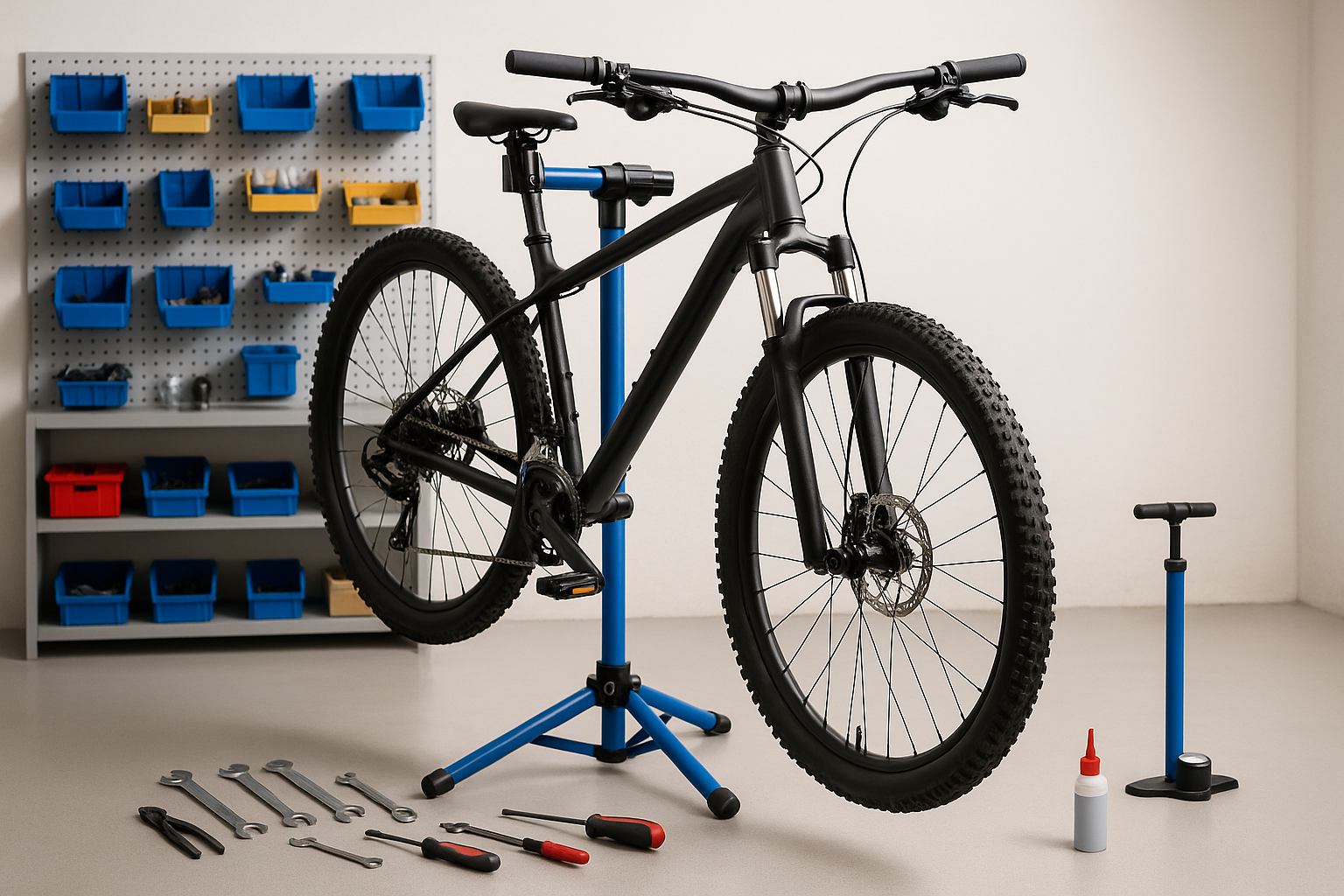
The sun is shining and you surely can't wait to get on your bike. However, before you start pedalling hard, spend a few minutes on a quick but crucial check. This way you will not only significantly improve your safety on the bike, but also enjoy a more comfortable ride and avoid unexpected technical problems far from home. That is why we have put together this clear checklist. Go through it before every ride and ride with confidence.
1. Tyres: the foundation of a comfortable and safe ride
First of all, focus on the tyres, which are absolutely essential. Only then will you have optimal contact with the surface, better handling and a lower risk of a puncture.
- [ ] Tyre pressure: First check that the tyres are firm enough. You will find the recommended pressure (in PSI or bar) right on the sidewall of the tyre. Then use a pump with a gauge to inflate them.
- [ ] Visual check of the tyres: Next, carefully inspect the tyre surface. Actively look for any cracks, cuts, bulges or signs of excessive wear.
- [ ] Removing sharp objects: Finally, gently run your hand over the tyre and check for embedded stones, glass or thorns that could cause a puncture.
2. Brakes: your life insurance
Of course, reliable brakes are your most important safety feature. That is why you have to take checking them really seriously.
- [ ] Brake lever action: Squeeze both the front and rear brake levers. They must offer reasonable resistance and must not touch the handlebars. When released, they must also return smoothly to their original position.
- [ ] Braking power: In addition, check how well they work. Lift the front wheel, spin it and brake. Then repeat with the rear wheel. The brakes must stop the wheel quickly and effectively.
- [ ] Checking cables and hoses: Just as important is checking that the brake cables or hydraulic hoses show no signs of fraying, cracking or other damage.
3. Chain and drivetrain: the heart of your bike
Next, look at the drivetrain, because when it works properly you get smooth shifting and efficient power transfer. What's more, regular care extends its life.
- [ ] Chain cleanliness and lubrication: First check that the chain is clean. Remember that too much dirt and old lube makes shifting worse. So always lubricate the chain appropriately – it must not be too dry or too greasy.
- [ ] Chain condition: At the same time, check the chain for signs of rust or damaged links.
- [ ] Shifting: Ideally, run through all the gears to make sure shifting is smooth, precise and the chain doesn't skip.
4. Wheels: strength and stability
The wheels must be firmly attached and also spin freely.
- [ ] Wheels firmly attached: Try to move the wheels sideways. There must be no play at all. Make sure the quick-release levers or thru-axles are correctly and firmly tightened.
- [ ] Free spinning: Then spin the wheels. They should turn freely and smoothly without rubbing on the brake pads or the frame.
- [ ] Checking the spokes: If you have spoked wheels, gently squeeze adjacent pairs of spokes. They should all have similar tension. None may be visibly loose.
5. Handlebars and saddle: for stability and comfort
A loose handlebar or saddle can easily lead to a dangerous loss of control.
- [ ] Handlebar tightness: Stand in front of the bike, clamp the front wheel between your legs and try to turn the handlebars. They really must not move independently of the wheel. Also check that the stem is tight.
- [ ] Saddle tightness and height: Make sure the saddle is firmly tightened, doesn't move sideways and is set to the right height for efficient pedalling.
6. Visibility: lights and reflectors
Of course, if you plan to ride at dusk, in the dark or in poor visibility, this part is a must.
- [ ] Lights working: Switch on the white front light and red rear light to make sure they work and have enough battery.
- [ ] Clean reflectors: Finally, make sure all mandatory reflectors (white front, red rear, orange on the pedals and wheels) are clean and undamaged.
What to do if you find a problem?
But what if you discover a problem during this quick check? In that case, don't ride!
- Minor problem: Try to fix it on the spot (e.g. pump up a tyre, tighten a quick-release).
- More serious problem: On the other hand, if you are not sure how to fix the problem or it is something more complex (e.g. brakes, shifting), don't take risks. It is better to take the bike to a professional bike shop.
Important note: Use this checklist for a quick check before every ride. It definitely doesn't replace regular, more thorough maintenance, which you should carry out several times a year or leave to the professionals.
We wish you a happy and safe ride!