Riding a Bike or Scooter in a Thunderstorm: How to Survive and When to Give Up
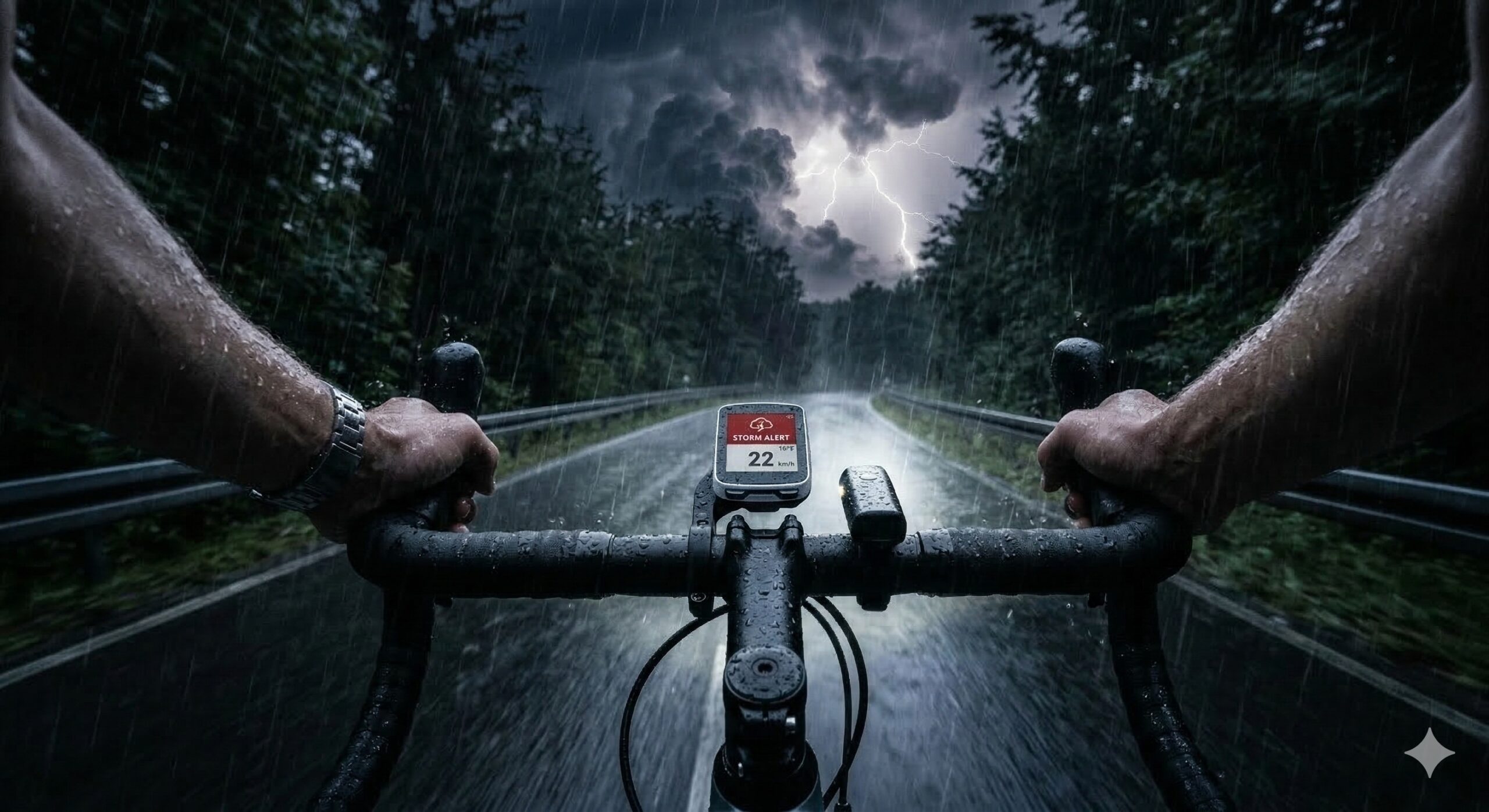
The sky darkens, the temperature drops sharply and the wind changes direction completely. That's the moment the fun stops. A thunderstorm doesn't arrive gradually – it strikes fast. Playing the hero on two wheels is pure gambling, but sometimes it catches you unprepared out on the road. Here's a complete guide to what to do when a storm is bearing down on you.
1. The first warnings and the radar (when not to set off at all)
If you see black clouds, don't look at the sky – look at your phone. Open a weather radar (for example your national weather service or Windy). If the core of the storm (red and purple zones) is heading towards you, your ride is over. No "I'll just make it". In a storm conditions change from minute to minute and the clouds regularly move faster than a cyclist.
2. Escaping lightning and the 3-second rule
Once you're out and it starts to thunder, you need to know how much time you have. Count the seconds from the moment you see the lightning until you hear the thunder.
- Basic maths: 3 seconds = the storm is 1 kilometre away.
- If the gap is under 10 seconds (the storm is closer than 3 km), you are in immediate danger and must look for shelter at once.
- Where NEVER to shelter: Under isolated trees, in open meadows, under high-voltage pylons, at the edge of a forest.
- Where to shelter: Solid buildings, petrol stations, brick bus shelters, underpasses or under bridges (watch out for flash floods). In a forest, look for the lowest dense undergrowth.
Ditch your bike or scooter (literally)
If a thunderstorm with lightning catches you in an open field and you have absolutely nowhere to shelter, your machine is your worst enemy. A bike frame and a scooter stem are made of metal and act as a perfect lightning conductor. Lay the machine on the ground and move at least 10 metres away from it. Crouch down, keep your feet close together and cover your ears with your hands. Never lie down on the ground – you need to minimise your contact with the ground so that step voltage doesn't pass through you.
3. Visibility and riding through a "wall of water"
A storm means instant darkness and heavy rain through which car drivers can see absolutely nothing. The wipers can't keep up and the windows fog up. If you don't switch on strong lights at the first drops, you are invisible to drivers. Switch your lights from flashing to a constant strong beam – flashing light scatters in heavy rain and makes it harder for drivers to judge your distance.
4. Wet roads and hidden mines on the verge
Water turns everything to ice and adds new risks.
- A minefield on the verge: Heavy rain instantly washes all the gravel, broken glass, nails and broken branches from the middle of the road to the edges (where you ride). The risk of a puncture in a storm rises by hundreds of per cent. Ride extremely carefully and watch your line.
- Road markings: White lines and pedestrian crossings are incredibly slippery when wet. Don't brake or turn on them.
- Rails: Always cross tram rails at as large an angle as possible (ideally at right angles), otherwise your wheel will drop into them.
- Losing your brakes on a bike: Classic rim brakes (V-brakes) lose a huge part of their effectiveness in the rain. By the time the pad wipes the water off the rim, you've travelled another 10 metres. Brake well in advance. Disc brakes will squeal frighteningly, but they will stop you.
- Danger on a scooter: Electric scooters often have small, hard tyres with a shallow tread. On wet asphalt they have almost no traction. Forget hard braking or sharp turns, otherwise you'll hit the ground instantly.
5. Saving your electronics and documents
A jacket may help for a while, but pockets usually get soaked first. An ordinary resealable plastic bag (ziplock) costing a few cents packed in your backpack will save a waterlogged phone or a soaked wallet.
As for the machine itself: e-bikes and e-scooters usually only have protection against splashing water (IPX4/IPX5). That doesn't mean they are waterproof! An extremely heavy downpour can get past the seals. Riding through deep puddles is a complete disaster. If you submerge a hub motor or a battery in the chassis, you are asking for a short circuit and a ruined machine worth hundreds of euros. Ride around puddles – you never know how deep a pothole is hiding in them.
6. The final touch: what to do when you get home
The storm ends, but the work continues at home. If you just throw a soaked bike or scooter into a corner or the cellar, the chain will start to rust by morning and moisture may get into the contacts.
- At least give the machine a rough wipe with a dry cloth.
- If you have an e-bike or e-scooter, don't charge it straight away! Let it dry at room temperature for at least a few hours.
- Spray the chain on your bike with oil (it pushes out the water), otherwise an expensive service awaits.