Blog
How to Survive Strong Wind on a Bike or Scooter: The Complete Guide
16.03.2026
• Admin • 5 min read
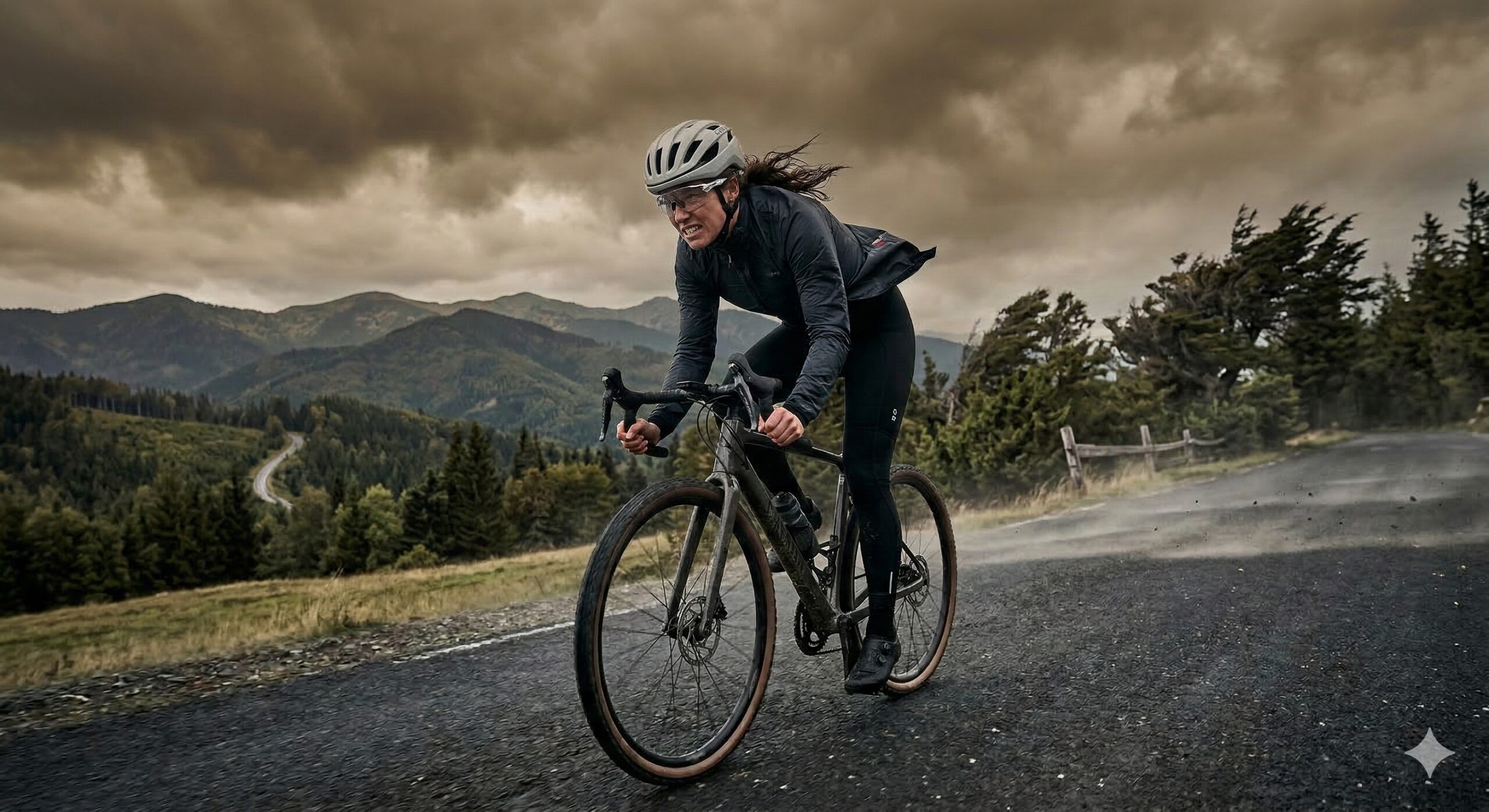
Strong wind can turn an otherwise relaxed ride into a real battle for balance. It doesn't matter whether you are pedalling or standing on a scooter deck – when a gust hits you, physics doesn't let go. Nature has the upper hand, but with good preparation and the right technique you can safely cope with this kind of weather too.
Preparation before you set off
The best way to cope with extreme wind is to know about it in advance and adapt your technique and gear accordingly.
- Check the radar and forecast: Apps such as Windy or your national weather service will show you the exact direction and strength of the gusts. If extreme warnings are issued, consider postponing your ride.
- Route tactics: Plan wisely. If the wind is blowing in one direction, plan your route so that you ride into the wind at the start of the trip. On the way back, when you're already tired, the wind will literally push you home.
- Tyre pressure and sacrificing speed: Slightly reduce the tyre pressure (e.g. by 0.5 to 1 bar). The rubber will follow the terrain better and give you slightly better grip in side gusts. How much will it slow you down? The higher rolling resistance of a softer tyre will cost you about 1 to 2 km/h on asphalt (or an extra 10–15 watts of effort). Compared with not being blown into a ditch by a strong gust, that's a negligible and very sensible price for stability.
- Don't forget your glasses: In the wind, dust, sand and insects fly through the air. Protecting your eyes is a matter of safety here, not style. Riding blind in a 30 km/h wind is pure gambling.
- Watch your battery range: If you have an e-bike or electric scooter, a strong headwind is literally death for the battery. Air resistance increases with the square of speed. Riding into a strong headwind can shorten your usual range by 30% to 50%. Take this into account when planning your route, otherwise you'll be pushing a heavy machine home.
Riding technique and basic rules
Before we look at specific terrain, there are a few universal principles:
- Lower your centre of gravity: The more you crouch, the smaller the area you expose to the wind. On a bike, hold the drops or lean further forward. On a scooter, bend your knees slightly.
- Dress aerodynamically and zip up: A loose jacket works like a parachute. It will not only slow you down, but the wind will also pull you sideways by it. Zip your jacket up to the neck and tuck away any flapping cords.
- A firm but relaxed grip: Hold the handlebars firmly so a gust can't rip them out of your hands, but don't let your whole body stiffen. You need to be able to react smoothly to changes in wind direction.
Riding in open country
Fields and long embankments are the hardest in the wind, because there are no natural obstacles.
- Fighting a headwind: It's frustrating and physically exhausting. Don't try to maintain your usual speed by force. Shift to an easier gear, keep a higher cadence (pedal faster) and accept a slower pace.
- Drafting: If you're riding in a group, this is your most powerful weapon. Tuck in closely behind the rider in front (riding in their slipstream). The rider behind can save 30% to 40% of their energy. Take turns at the front regularly so that the lead rider doesn't burn out completely.
- Treacherous crosswinds: They are much more dangerous. You'll have to ride leaning slightly into the wind. Be extremely careful when lorries and vans overtake you. For a moment they create a "wind shadow" in which you lose the wind's resistance and can fall towards the vehicle. Once they've passed, the wind hits you with full force.
Riding in forests and built-up areas
Forests and towns often shelter you from the wind, but they bring other risks.
- On forest roads: Forests are great windbreaks. The biggest risk here, however, is falling branches. When storms are forecast, don't enter the forest at all. Also be prepared for the wind to hit you very unexpectedly when you ride out of dense forest into an open clearing.
- In towns and between buildings: Tall buildings create so-called wind tunnels. At street corners and junctions the wind picks up speed and changes direction. Also watch out for parked cars – a gust can rip a car door out of someone's hands straight into your path.
Differences between a bike and a scooter
- Electric scooter: Small wheels and an upright stance make it a very unstable machine in strong wind. Your body acts like a sail. In gusty crosswinds it is much safer to slow down considerably or, on open stretches, to get off and push. With an e-scooter, keep a particularly close eye on the rapidly dwindling battery percentage.
- Bicycle: Thanks to larger wheels and the gyroscopic effect, it holds its line better. Watch out for deep aero rims – crosswinds push on them extremely hard and a gust can literally rip the steering out of your hands.
#leto
#bicykel