A Ticking Time Bomb Under Your Feet? The Truth About E-Scooter Fires and How to Prevent Them
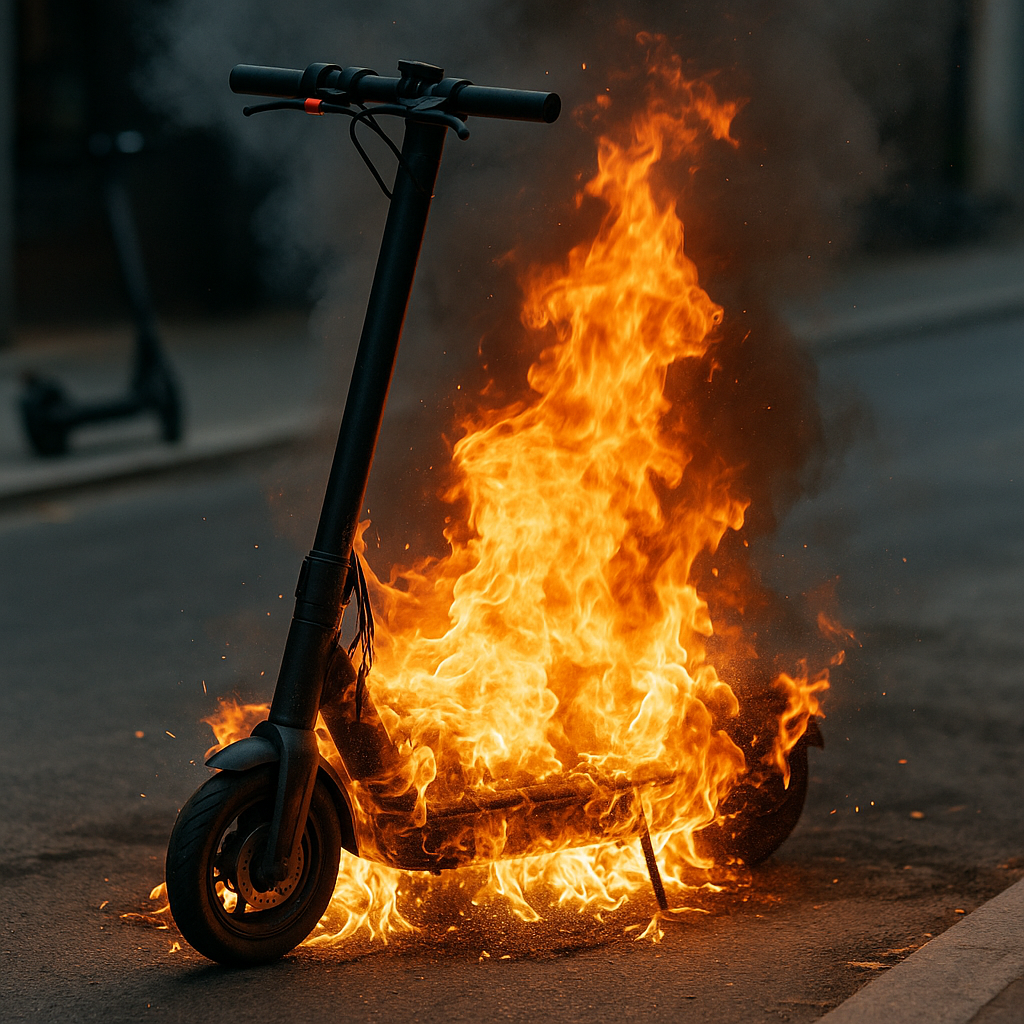
Reports of electric scooters spontaneously catching fire are appearing more and more often and raise justified concerns. Is this modern means of transport really that dangerous? The answer isn't simple. The problem isn't the scooter as such, but its heart – the lithium-ion (Li-ion) battery. Understanding the risks of this technology is key to avoiding disaster. This article explains why fires happen and how you can effectively protect yourself and your property.
Why do they actually burn? The battery is to blame
Lithium-ion batteries are a small miracle. They can store a huge amount of energy in a small, light package, which makes them ideal for mobile devices from phones to scooters. This high energy density, however, is also their biggest weakness.
If the battery is damaged or mishandled, a process called thermal runaway can start. It is a frightening chain reaction in which a damaged cell begins to produce extreme heat. This heat damages neighbouring cells, which also start burning, and the process spreads like an avalanche. The result is an intense fire that is very hard to put out and is often accompanied by explosions and toxic gases.
The most common causes of battery fires
Thermal runaway never happens just like that. There is almost always one of the following causes behind it:
- Physical damage: A fall, a hard hit against a kerb or a traffic accident can damage the internal structure of the battery. Even if it looks intact on the outside, a short circuit can occur inside that triggers the chain reaction – sometimes with a delay of several hours.
- Using the wrong charger: This is one of the most common and most dangerous mistakes. Cheap, uncertified or incompatible chargers can overcharge the battery, causing it to overheat and fail. Always, under all circumstances, use only the original charger supplied by the manufacturer.
- Poor-quality batteries and manufacturing defects: Cheap no-name scooters often use low-quality battery cells and lack a key safety feature – the Battery Management System (BMS). The BMS is the brain of the battery: it constantly monitors temperature, voltage and current and can safely stop charging or discharging if anything is abnormal.
- Unsuitable charging conditions: Charging in direct sunlight, near a radiator or covering the scooter while charging can cause dangerous overheating. Charging the battery in freezing temperatures is just as harmful.
Warning signs you should never ignore
The battery will almost always let you know that something is wrong. If you notice any of these symptoms, stop using and charging the scooter immediately:
- Unusual smell: A sweetish, metallic or pungent chemical smell.
- Deformation: Any swelling, bulging or change in the shape of the battery casing.
- Extreme heat: The battery is hot to the touch even though it isn't charging or being used.
- Smoke or hissing: Any smoke or sound (hissing, crackling) coming from the battery.
- Discolouration: A change of colour or traces of leakage on the battery casing.
Prevention is key: how to minimise the risk
- USE ONLY THE ORIGINAL CHARGER. If you lose it, buy an original replacement directly from the manufacturer.
- NEVER CHARGE UNATTENDED. Especially not overnight while you sleep.
- CHARGE IN A SAFE PLACE. In a well-ventilated room, away from flammable materials (carpets, curtains, furniture) and away from escape routes such as hallways and entrance halls.
- DON'T COVER THE SCOOTER WHILE CHARGING. It needs airflow around it to cool down.
- HAVE THE BATTERY CHECKED AFTER A FALL. Even if you can't see any external damage, take it to a professional service.
- AVOID EXTREME TEMPERATURES. Don't charge in direct sunlight or in freezing conditions. If you bring a cold scooter home, let it warm up to room temperature first.
- BUY FROM TRUSTED BRANDS. Investing in a quality scooter from a reputable manufacturer is an investment in your safety.
What to do if it catches fire?
If the battery ignites despite all precautions, the right reaction can prevent a disaster.
- YOUR SAFETY COMES FIRST! Don't try to be a hero. A lithium battery fire is extremely dangerous, spreads quickly and releases toxic fumes.
- LEAVE THE AREA IMMEDIATELY. Make sure everyone else is safe and warn your neighbours if necessary. Close the door to the room where the fire is to slow the spread of smoke and flames.
- CALL THE FIRE BRIGADE ON 150 (or 112). When calling, state clearly and immediately that a LITHIUM BATTERY is burning (e.g. from an electric scooter). This information is crucial for the firefighters, who will prepare special equipment and extinguishing agents.
Extinguishing and risks: why you shouldn't improvise
Extinguishing lithium batteries is a demanding process that requires a special approach.
- Never put out a battery fire with a jet of water! On contact with burning lithium and other metals in the battery, a violent chemical reaction and electrolysis occur – water is broken down into extremely flammable hydrogen and oxygen. Using water can therefore cause an explosion and make the fire massively worse. Firefighters may use water only to cool the surroundings so that the fire doesn't spread.
- Which extinguishers work? This type of fire calls for class D extinguishers (for combustible metals) or special extinguishing agents developed for lithium batteries. Foam or dry powder may have limited effect in suppressing the flames but may not stop the chemical reaction inside the battery. If you have such an extinguisher and know how to use it safely, you can attempt a first intervention, but never at the expense of your own safety.
After the fire is out: the risk remains
Even after the visible flames have been put out, the battery is still extremely dangerous. Thermal runaway may still be going on inside and there is a risk of re-ignition, even hours later.
- Monitoring is key: After extinguishing the fire, firefighters monitor the battery's temperature with a thermal camera.
- Safe disposal: The safest way to prevent re-ignition is to fully submerge the battery in a large container of water (or a special solution) for at least 24 to 48 hours. Leave this step strictly to professionals.
Electric scooters are a great helper, but the technology inside them demands respect and a responsible approach. With knowledge and the right habits you can reduce the risk of fire to an absolute minimum and enjoy only the benefits of modern urban mobility.