Head Injury on an E-Scooter: Symptoms, First Aid and When to Act (2025)
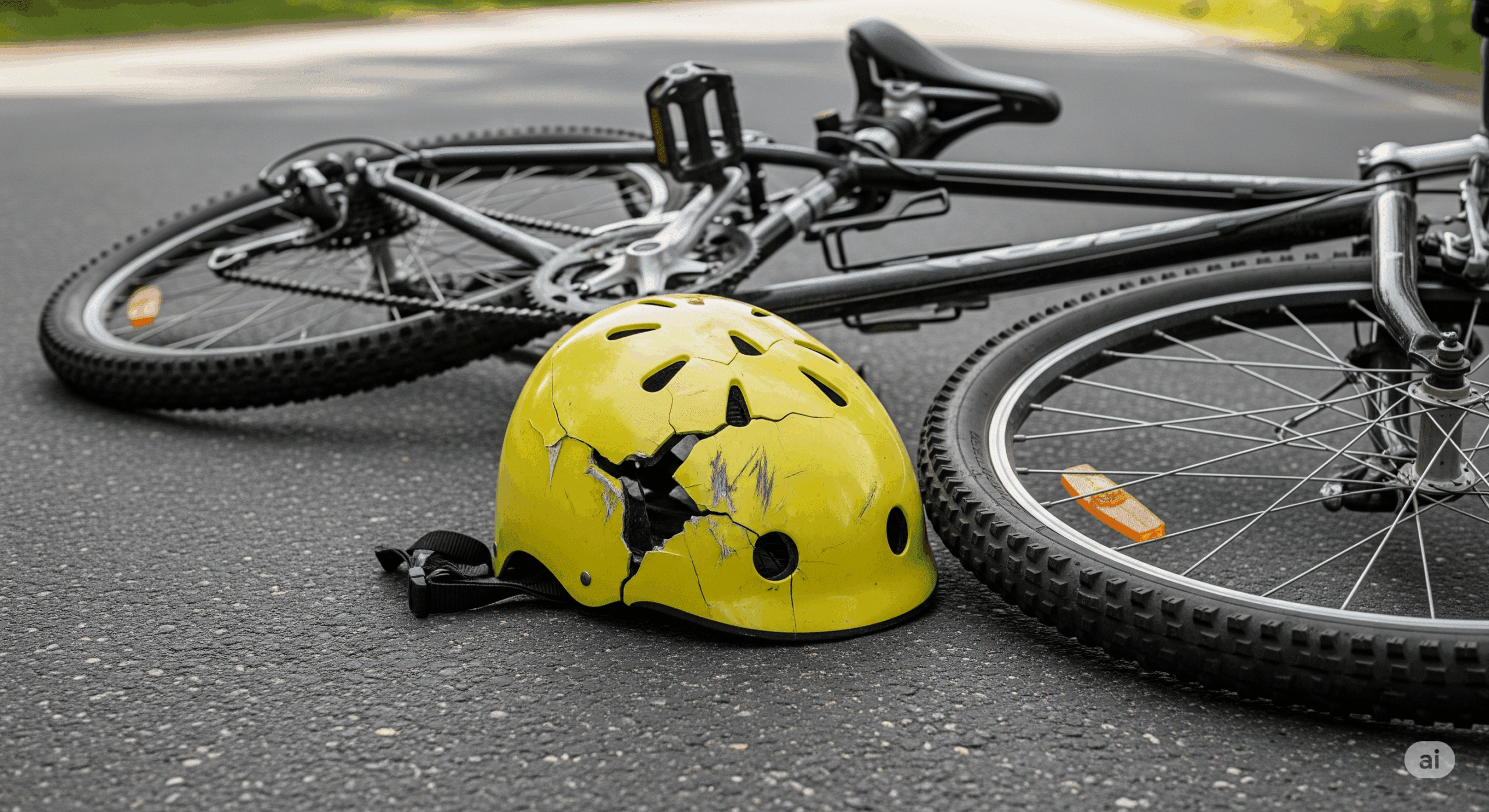
A helmet is essential, but even the best one can't prevent every injury. That is why a head injury is the most serious risk a scooter rider faces. The problem is that the line between an ordinary bump, a concussion and a life-threatening condition can be very thin, and symptoms may appear with a delay.
Knowing how to assess the situation correctly and when to call for help immediately is crucial. This guide will help you recognise the warning signs.
The first moments after a fall: what to do and what not to do
If you witness a fall in which the rider hit their head and is lying motionless, your first reaction is decisive.
- Don't move them! The most important rule. A head injury is often accompanied by a spinal injury, and handling them incorrectly could damage the spinal cord.
- Check whether they are conscious: Speak to the person loudly. If they don't respond, gently shake them by the shoulders.
- If they are unconscious (not responding):
- Call 155 or 112 immediately. Put your phone on speaker so your hands are free.
- Check their breathing: Open the airway by gently tilting the head back. Put your ear to their mouth and nose and watch the chest. Listen, feel and look to see whether they are breathing normally (not gasping or gurgling).
- If they are not breathing normally: Start chest compressions as instructed by the emergency operator.
- If they are conscious: If it is safe, help them move out of traffic. Sit them in a half-sitting position and talk to them.
Concussion: the most common serious injury
A concussion occurs when the brain hits the skull. The injured person may feel the symptoms immediately, but also a day or two later.
Typical symptoms of concussion:
- Headache and dizziness
- Disorientation, confusion (not knowing where they are or what day it is)
- Nausea or vomiting
- Memory problems (often not remembering events just before the injury)
- Sensitivity to light and noise, fatigue
Important: Only one in ten concussion patients loses consciousness. Loss of consciousness is therefore not a requirement.
Red flags: when is it life-threatening?
Some symptoms signal a serious, life-threatening injury such as bleeding on the brain or brain swelling. The skull is a closed space and any bleeding inside it increases the pressure on the brain. If you notice any of the following symptoms, call 155 immediately!
- Worsening headache: The pain gets worse and doesn't ease.
- Repeated vomiting: The injured person vomits several times in a row.
- Changes in behaviour: Irritability, aggression, confusion, repeating the same questions.
- Impaired movement: Weakness or numbness in an arm or leg.
- Unequal pupils: One pupil is visibly larger than the other.
- Bleeding or clear fluid from the nose or ear: This may be cerebrospinal fluid, which signals a fracture of the base of the skull.
- Gradually worsening consciousness: The injured person becomes increasingly drowsy and you can hardly wake them.
- Speech or vision problems.
- Seizures.
Take extra care with children and older people
- Children: They can't describe pain precisely. Warning signs include persistent crying, changes in feeding, loss of interest in their surroundings, irritability or excessive sleepiness.
- Older people: They have a higher risk of bleeding on the brain even after minor injuries, especially if they take blood thinners. Older people often have only very subtle symptoms.
After the injury: monitoring at home
If a doctor has ruled out a serious injury and sent you home, monitor the patient for the next 24 hours.
- Let them rest: No physical or mental exertion (sport, computer, television).
- They may sleep: There is no need to keep them awake by force.
- Check on them regularly: Every 2–3 hours, gently wake them and ask a simple question (e.g. "What's your name?"). Watch whether they respond normally.
- If any of the "red flag" symptoms mentioned above appear while monitoring, call 155 immediately.
Never underestimate a blow to the head. Knowing what to look out for and when to act is the best protection against lasting consequences.