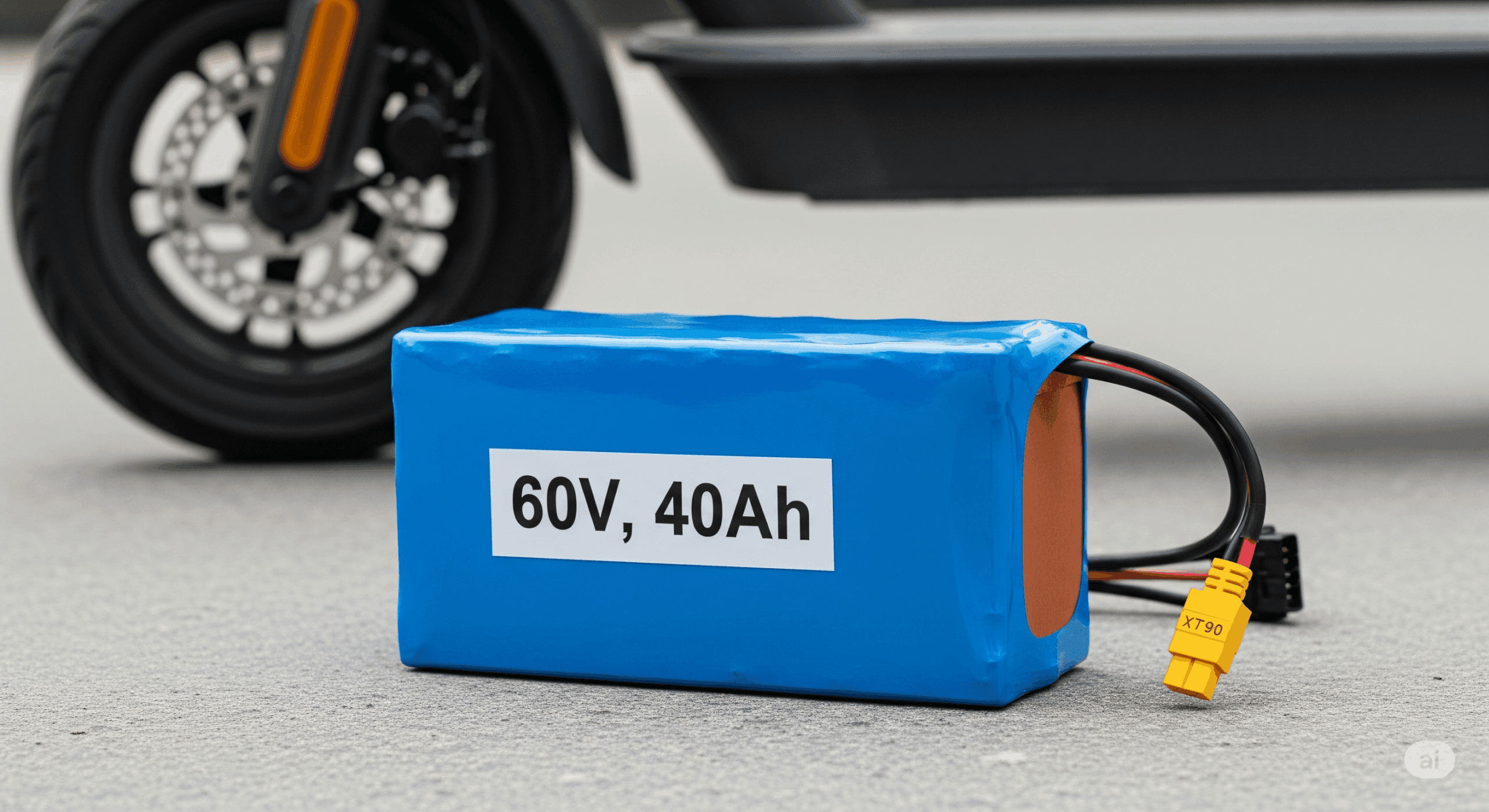
The battery of an electric scooter is its power plant. It stores all the energy needed for propulsion, controls, lights and every other function. It is one of the most important – and most expensive – parts of your machine.
Today the industry standard is lithium-ion (Li-ion) batteries, which offer high energy density and a long life. Cheaper models or children's scooters may still use older lead-acid batteries. A key part of every modern battery is also the BMS (Battery Management System) – the "brain" that makes sure it works correctly and safely.
The bigger the battery, the greater the capacity measured in watt-hours (Wh), and therefore the greater the range, speed and power. However, this also means more weight and a higher price. Let's dive into the world of batteries and find out everything you need to know about them.
Battery types: lithium-ion vs. lead-acid
- Lithium-ion (Li-ion): The modern technology that dominates the market. It offers one of the highest energy densities, meaning a lot of energy in a small, light package. It doesn't suffer from the "memory effect" (loss of capacity with partial charging) and needs little maintenance. The most common versions for scooters are lithium manganese (INR, NMC), which offer a great balance of high capacity, safety and price. Their drawback is sensitivity to high temperatures and gradual ageing over the years.
- Lead-acid: The technology we know from car batteries. It is cheap and reliable, but has a very low energy density. This means it is very heavy for the amount of energy it can store. A lead-acid battery can be up to 10 times heavier than a Li-ion battery of the same capacity. Today it is used almost exclusively in children's scooters.
Anatomy of a battery: cells and the BMS "brain"
A battery isn't a single piece. It consists of many individual cells connected together into one unit (a "pack"). These cells can come from different manufacturers, with the highest-quality and most reliable made by brands such as Samsung, Panasonic, Sony and LG.
The whole system is overseen by the BMS (Battery Management System). This electronic circuit is the brain of the battery and is responsible for:
- Monitoring the state and voltage of the individual cells.
- Protecting the battery against overcharging, deep discharge, short circuits and overheating.
- Estimating the state of charge and optimising performance.
Important terms you should know
- Voltage and voltage sag: Voltage (measured in volts, V) affects power and speed. Under load, for example when accelerating, the voltage temporarily drops – a normal phenomenon called "voltage sag". When the load passes, the voltage returns to its true level. A significant voltage drop, however, can signal an ageing battery.
- Capacity (watt-hours): Battery capacity is measured in watt-hours (Wh) and directly affects range. An average scooter has a capacity of around 250 Wh, while extreme models can have thousands of Wh and a range of over 80 km.
- C-rate (charge/discharge rate): This figure tells you how quickly the battery can be charged or discharged. A C-rate of 1C means the battery fully charges in one hour. Fast charging (a high C-rate) is convenient, but generates more heat and can shorten battery life in the long term.
Battery life and how to maximise it
A typical Li-ion battery lasts about 300–500 charge cycles before its capacity drops noticeably (usually to 80% of the original value). For an average scooter this represents roughly 5,000 to 16,000 kilometres. With proper care, however, you can extend its life significantly.
- Charge gently: Ideally keep the charge level between 20% and 90%. Avoid full discharges and frequent charging to 100%.
- Never store the battery completely flat or fully charged. For long-term storage (e.g. over winter), charge it to around 50% and check it regularly.
- Watch the temperature: Never charge or use the battery at temperatures below 0 °C or above 45 °C.
- Ride smoothly: Aggressive riding with hard acceleration and braking puts more strain on the battery.
Signs of an ageing or failing battery
- Significantly shorter range: The clearest sign that the battery is losing capacity.
- Significant voltage drop: The scooter loses power even though the display shows a relatively high charge level (e.g. below 30%).
- Charging problems: Charging takes unusually long, or, conversely, the charger reports the battery as fully charged too early.
- Sudden shutdowns: The BMS switches the scooter off under load (e.g. when riding uphill) to protect damaged cells.
Looking after a battery isn't rocket science. Read the manual and treat it with respect. With these simple habits you'll make sure it serves you reliably and at maximum performance for many years.