Lithium Battery Fires: How to Prevent Them and What Are the Risks?
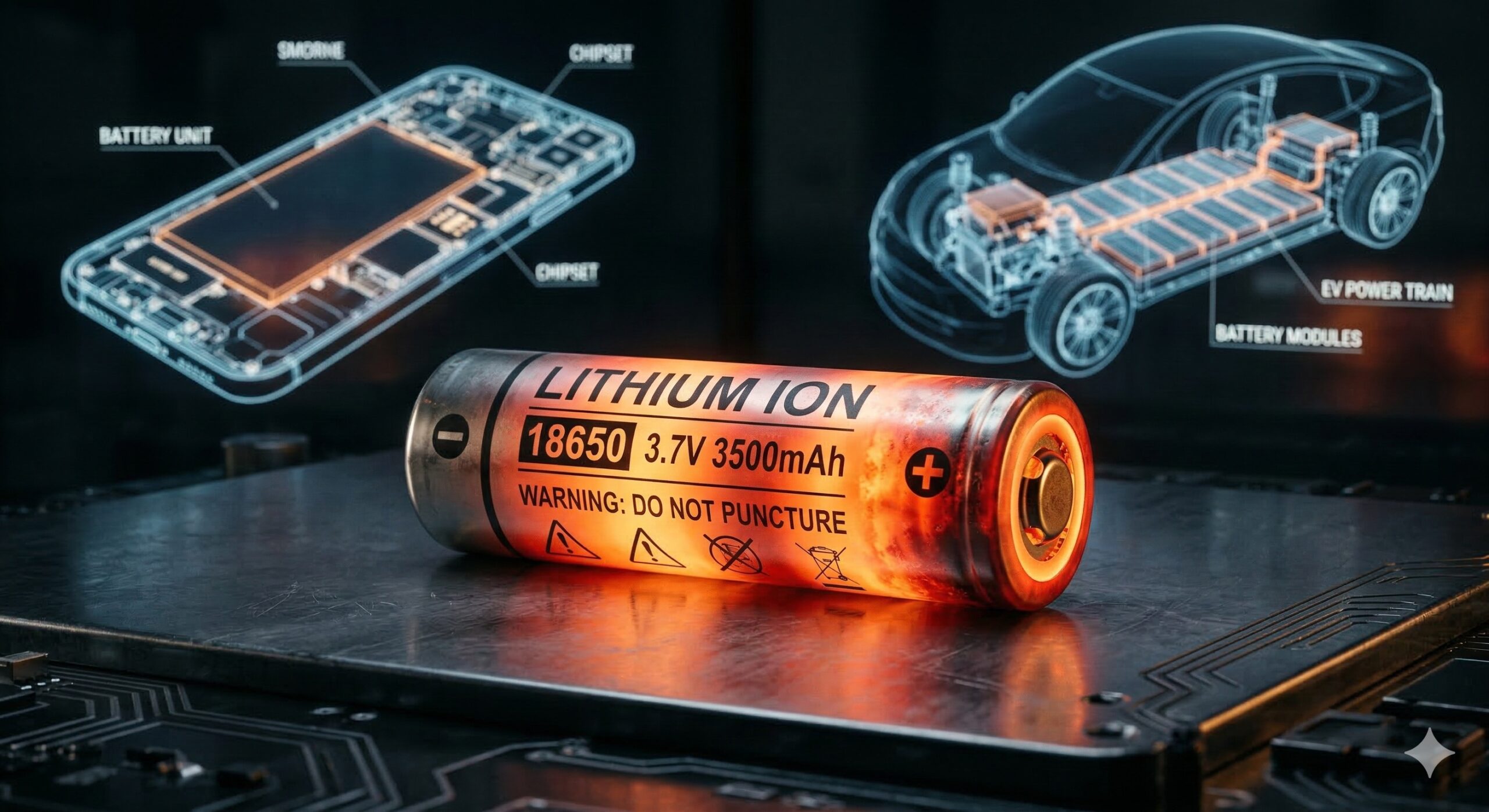
The topic of lithium battery fires is becoming ever more relevant, as these batteries are found almost everywhere – from smartphones to electric cars. Although they are highly efficient, they carry a risk that can lead to disaster. In this article we look at why these incidents happen, what goes on inside a cell before a fire and how prevention can protect you and your property.
Why do lithium batteries catch fire? Thermal runaway is to blame
The key concept for understanding why a lithium battery can catch fire is thermal runaway. It is a dangerous, self-accelerating chain reaction in which the temperature inside a battery cell rises uncontrollably, leading to the release of flammable gases and an inevitable fire.
Inside every Li-ion battery there is a positive electrode (cathode) and a negative electrode (anode), separated by a thin, porous separator. All of this is immersed in a highly flammable liquid electrolyte. If this fragile balance is disturbed, the system fails.
The most common triggers of a battery fire
What can start this dangerous chain reaction? There are several causes:
- Physical damage: Dropping the device, a hard impact, piercing or crushing the battery can damage the separator. The electrodes then come into direct contact and an internal short circuit occurs – the most common trigger.
- Overcharging and incorrect charging: Using a non-original, damaged or unsuitable charger can "overload" the battery with energy. This leads to extreme overheating and the chemical breakdown of internal components.
- Exposure to extreme temperatures: Leaving a phone on the dashboard in summer or charging near a radiator can be just as dangerous. High temperatures speed up degradation processes.
- Manufacturing defects: Although rare, microscopic metal particles or other production defects can act like a time bomb that sooner or later causes a short circuit.
- Age and deep discharge: Every battery has a limited lifespan. Old, worn cells, or those left deeply discharged for a long time, are more prone to failure.
What happens inside a battery before it explodes: step by step to disaster
Thermal runaway has several phases. Recognising the first ones can save your property.
- Initiation and overheating: It usually starts with local overheating caused by a short circuit or another cause.
- Gas formation and hissing: The temperature then rises above 80 °C. The electrolyte starts to decompose and produce extremely flammable gases (hydrogen, methane). As a result, the pressure inside the cell rises, causing the battery to swell. At this stage you may hear hissing as the gases try to escape through the safety vents.
- Uncontrollable temperature rise: The reactions then become irreversible. The temperature jumps to 400–700 °C and the separator melts completely, causing a massive short circuit throughout the cell.
- Ignition and fire: Finally, the escaping flammable gases ignite instantly on contact with air and the extreme temperature. The flame is intense and hard to put out, because the battery produces its own oxygen as it burns.
Warning signs: how to recognise the risk of fire
Your battery gives you warning signs before it fails. Never ignore them!
- Swelling or any deformation of the device's casing.
- Extreme heating while charging or during normal use.
- Hissing, crackling or a strange chemical smell.
- Visible leakage of liquid from the battery.
- A sudden, significant drop in battery life or inability to charge to 100%.
Prevention is key: tips for safe use and charging
- Use original accessories: Always use chargers and cables from the device manufacturer or certified third parties.
- Don't charge unattended: Don't leave devices charging overnight, especially not under a pillow or on a flammable surface (bed, sofa).
- Protect the device from drops and impacts: Use a good-quality protective case.
- Don't expose the device to extreme temperatures: Protect it from direct sunlight, frost and heat sources.
- Act immediately if it is damaged: If you drop the device or notice any warning sign, stop using it and take it to a service centre to be checked.
- Dispose of it correctly: Never throw a damaged or old battery in household waste. Take it to a recycling centre or an electronics retailer. You can find more safety information on the website of the Slovak Fire and Rescue Service.
If you notice your battery swelling or hissing, disconnect it immediately, move it to a safe, non-flammable place (e.g. outside on concrete) and keep it well away from flammable materials. Your safety comes first.